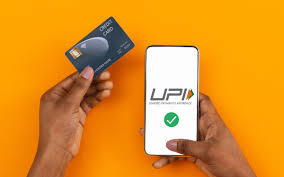
RuPay UPI Credit Cards let you pay with a credit line through UPI apps like PhonePe, Paytm, and BHIM, while traditional credit cards transact via card networks at POS/e-commerce using card numbers, chips, or tokenized details. The core difference is the UPI-first experience and merchant acceptance rails for RuPay UPI Credit Cards versus card-rail authorization for Visa/Mastercard/RuPay cards in the traditional flow.​ How they work RuPay UPI Credit Cards are linked to your UPI ID, so you “Pay by Credit” in UPI apps with 2FA (UPI PIN) and the transaction posts to your card statement like any credit purchase.​ Traditional credit cards use card credentials or tokenized cards at POS or online checkouts, authorized over card networks and settled through acquiring banks.​ Acceptance RuPay UPI Credit Cards are accepted at UPI QR and UPI intent-enabled merchants; acceptance depends on merchant category enablement and issuer settings in UPI apps.​ Traditional credit cards are accepted wherever the card network is supported (POS, e‑commerce, international merchants if card is enabled), independent of UPI.​ Fees and MDR UPI for consumers typically remains zero direct charge; MDR on RuPay UPI Credit Card transactions is governed by policy/issuer-merchant arrangements and does not alter the cardholder’s interest/fee schedule for revolving or late payments.​ Traditional credit cards follow standard MDR paid by merchants and may levy fees like annual charges, cash advance, late fees, and interest on revolved balances for cardholders.​ Rewards RuPay UPI Credit Cards can earn card rewards on eligible UPI merchant categories as defined by each issuer; some categories may be excluded or capped.​ Traditional credit cards earn rewards per their category multipliers (travel, dining, fuel) across POS and online, with broader historical coverage.​ Limits and controls RuPay UPI Credit Cards expose UPI-specific controls in the app (enable/disable UPI credit, set UPI limits) on top of normal card controls like tap-to-pay or international usage.​ Traditional credit cards are managed via issuer/mobile banking controls for channels, limits, and tokenization, without UPI toggles.​ Security RuPay UPI Credit uses UPI’s push authorization with PIN plus card issuer risk checks, reducing exposure of full card numbers during routine QR payments.​ Traditional credit cards rely on EMV chip, OTP/3DS for e‑commerce, and network tokenization to protect PAN at merchants and in stored credentials.​ Cross-border and offline RuPay UPI Credit Card usage is primarily domestic via UPI rails; cross-border UPI is limited to select corridors and relies on bilateral enablement, which may not mirror full card acceptance abroad.​ Traditional cards support international POS/e‑commerce where the network operates, with currency conversion and dynamic spend controls.​ When to pick which Choose RuPay UPI Credit if most spending is at domestic QR-enabled merchants and you prefer UPI apps for checkout, bill-splitting, and invoice trails.​ Choose traditional credit cards for frequent international travel, broad online subscriptions, and merchant categories where card rails deliver better rewards or acceptance.​ Comparison Feature RuPay UPI Credit Card Traditional Credit Cards Payment rail UPI apps with credit line posting to card statement ​ Card network via POS/e‑commerce/tokenization ​ Acceptance UPI QR and intent-enabled domestic merchants; corridor-based cross-border limited ​ Global acceptance per network (POS/online) ​ Fees to user Same card interest/fees; UPI app usage typically no extra consumer charge ​ Standard card fees and interest policies ​ Rewards Issuer-defined on UPI spends, category exclusions may apply ​ Established category rewards and multipliers ​ Controls UPI on/off and limits plus card controls ​ Card controls without UPI toggles ​ Security UPI PIN authorization; minimal PAN exposure at QR ​ EMV, 3DS/OTP, tokenization for PAN protection ​
Finance

RuPay UPI Credit Card vs Traditional Credit Cards: Key Differences, Acceptance, Rewards

RuPay UPI Credit Cards let you pay with a credit line through UPI apps like PhonePe, Paytm, and BHIM, while traditional credit cards transact via card networks at POS/e-commerce using card numbers, chips, or tokenized details. The core difference is the UPI-first experience and merchant acceptance rails for RuPay UPI Credit Cards versus card-rail authorization […]


impact of inflation on savings
Finance

The Impact of Inflation on Your Savings: Real Returns, Risks, and How to Fight Back

How inflation reduces savings value Inflation increases prices over time, so cash parked at low rates loses buying power; the gap between savings yields and inflation is the “inflation drag,” which compounds into large losses over years. Real return is the inflation‑adjusted gain: Real Return = (1+Nominal)÷(1+Inflation)−1(1+Nominal)÷(1+Inflation)−1; subtracting inflation is a rough shortcut, but the exact

what to know about insurance deductibles
Finance

What to Know About Insurance Deductibles: Health, Auto, and Home

Deductible basics A deductible is the initial amount paid by the policyholder on a covered claim; after this threshold, the insurer pays according to policy terms, and premiums typically fall as deductibles rise because risk‑sharing increases. Health deductibles generally reset annually, while auto and home deductibles apply per claim and are subtracted from the settlement

pay off debt or save first
Finance

Should You Pay Off Debt or Save First? A Clear, 4‑Step Playbook

The 4‑step decision Why the 6% threshold? Analysis suggests that when expected portfolio returns and tax advantages are weighed, paying off debts above roughly 6%6% tends to beat investing unmatched dollars for many savers; below that, investing may produce better long‑run outcomes, especially for those far from retirement. Adjust this threshold up or down depending on risk

psychology behind impulse spending
Finance

The Psychology Behind Impulse Spending: Why Smart People Splurge

Why the brain loves “buy now” How marketers tilt the field Why “good intentions” fail Even disciplined planners succumb when present bias meets high-arousal cues—the momentary value swamps future considerations, leading to time-inconsistent choices that earlier selves wouldn’t endorse. Real-time personalization makes this worse by targeting precisely when susceptibility spikes, shrinking the window for rational

what lowers your credit score
Finance

What Lowers Your Credit Score? The 10 Biggest Culprits

The biggest score drags How long negatives last Most derogatory items remain for seven years; Chapter 7 bankruptcy can last ten years, while hard inquiries typically affect scores for up to two years with the impact fading sooner. Late-payment damage is front‑loaded—largest initially, then diminishing as new positive history accumulates over months and years. Fastest

debt avalanche vs snowball
Finance

Debt Avalanche vs Snowball: Which Is Better and When?

Quick definitions Which is better? When to choose each A practical hybrid Start with a 60–90 day snowball to clear two or three smallest balances, then switch to avalanche to maximize savings—this can combine motivation with math without materially delaying payoff when APRs are spread out. Keep minimums on all debts, automate payments, and channel

Scroll to Top