
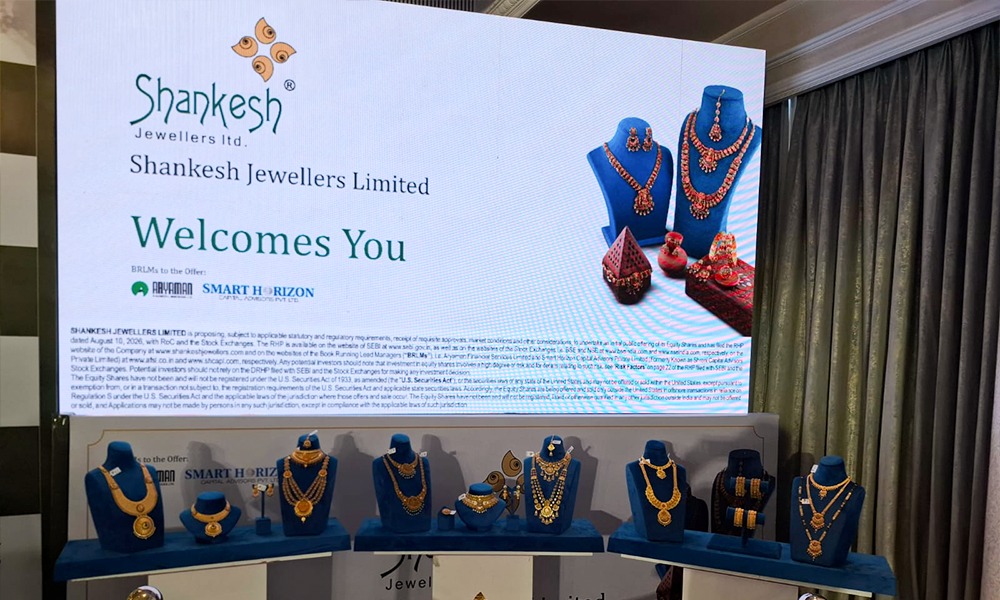
Mumbai-based B2B jewelry wholesaler Shankesh Jewellers opened its ₹367.18 crore initial public offering for subscription this morning. With a price band set between ₹88 and ₹93 per equity share, retail investors are now weighing whether this asset-light gold business merits a place in their portfolios.
A Light-Asset Approach to Gold
Unlike traditional, heavy-asset jewelry manufacturers, Shankesh Jewellers operates on a rather unique light-asset framework. The company utilizes local karigars and job workers across India for the physical manufacturing of its handmade gold jewelry, but tightly controls the design, inventory management, and final delivery processes. This operational structure has allowed the firm to post some eye-catching financial metrics leading up to its public debut.
One detail buried in the red herring prospectus that sets Shankesh apart from its competitors is its exceptional capital efficiency. For the fiscal year ending March 2026, the company reported a Return on Net Worth (RoNW) of nearly 51%. When placed side-by-side with listed peers operating in the same broader segment, the difference in capital return becomes quite stark.
| Jewelry Company | Price-to-Earnings (P/E) | Return on Net Worth (RoNW) |
| Shankesh Jewellers | 12.8x (Post-IPO estimate) | 50.97% |
| Sky Gold and Diamonds | 35.4x | 23.37% |
| Shanti Gold International | 9.7x | 23.42% |
Debt Reduction and Financial Trajectory
Beyond the margins, the mechanics of the offering highlight a significant debt-reduction strategy. Out of the ₹367.18 crore total issue size, ₹274.18 crore comes via a fresh issue of shares, while the remaining ₹93 crore is an offer for sale by the existing promoters. Management has earmarked ₹158 crore from the fresh proceeds specifically for the prepayment or repayment of current borrowings, which stood at roughly ₹167 crore at the end of March 2026. Clearing this debt load is expected to immediately ease interest expenses and potentially boost the bottom line in upcoming quarters.
The company’s recent revenue trajectory adds another critical layer of context. Shankesh reported operational revenue of ₹1,630.9 crore for the fiscal year 2026, up steadily from ₹1,403.9 crore the previous year. More importantly, this top-line expansion has scaled efficiently, with profit after tax surging from ₹40.3 crore in 2025 to ₹106.6 crore in 2026. Prior to opening the issue to the public, the company also secured approximately ₹110 crore from anchor investors, providing an early vote of institutional confidence.
Lot Size and Grey Market Sentiment
For those tracking the timeline, the retail application window will remain open until Thursday, August 20. Bidders must apply for a minimum lot of 160 shares, which translates to an upfront investment of ₹14,880 at the upper end of the price band. Out of the total shares available, 50% are reserved for qualified institutional buyers, 35% for retail participants, and 15% for non-institutional investors.
Ahead of the final allotment on August 21 and the anticipated listing on August 25 across both the BSE and NSE, early unofficial and unverified market chatter points to a grey market premium of ₹4 per share. This indicates a relatively muted early sentiment, translating to a marginal 4% premium over the ₹93 issue price, though these informal markets are notoriously volatile and do not guarantee actual listing day performance.
Conclusion
As the three-day bidding window kicks off, market watchers will be closely tracking whether retail and institutional demand accelerates for Shankesh Jewellers. The company’s high return on equity and debt-reduction plans make for a strong narrative, but investors will ultimately decide if the current market climate supports the valuation.
Disclaimer: The views expressed are for informational purposes only and do not constitute financial advice. Investing in stocks and IPOs involves significant risk. forgeup.in is not liable for any financial losses. Always consult a certified investment advisor before making any decisions.