HAL's profit after tax rose 10.6% on revenue up 14.9%, and the stock fell. The audited results explain that better than the headlines did. Cash generated from operations dropped by roughly two thirds, because HAL built ₹8,653 crore of extra inventory in six months. Its customer paid for most of it in advance. This report traces where the money actually went.
Source: HAL's audited standalone and consolidated results for the quarter and half year ended 30 September 2026, filed with BSE and NSE on 12 November 2026 (BSE 541154, NSE: HAL), with the auditors' reports of B. K. Ramadhyani & Co LLP of the same date. The statements are headed "Rs in Lakhs"; we convert to crore (1 crore = 100 lakhs) and cite the page of this 26-page filing for every figure.
The 60-second read
- Revenue ₹7,613.11 crore for the quarter, up 14.9% from ₹6,628.46 crore (page 3). Half-year revenue ₹13,128.39 crore, up 14.7%.
- Standalone profit ₹1,839.04 crore, up 10.6%. Consolidated profit ₹1,935.64 crore, up 16.0%. Both are correct; the gap is one line item, traced below.
- Operating cash flow was ₹1,577.85 crore for the half year against ₹3,419.65 crore of profit (page 6): 46 paise of cash per rupee of profit, against ₹2.43 a year earlier.
- Inventories reached ₹39,503.66 crore, up ₹8,653.00 crore in six months (page 4). That is three times everything HAL sold in the half year.
- Customer advances funded it. Other non-current liabilities rose ₹7,506.18 crore to ₹52,195.27 crore (page 5). Borrowings are nil; cash and bank balances total ₹47,448.80 crore.
- The auditor flagged two matters, and three more on consolidation, including provisional pricing on part of the revenue and board vacancies ForgeUp first recorded in April 2026.
What they actually make, and what this filing will not tell you
HAL designs, builds, overhauls and repairs military aircraft, helicopters, aero-engines and avionics, almost entirely for the Indian armed forces. It is a Maharatna central public sector enterprise, and the Government of India appoints its directors (page 11). The aircraft most of its current order book rests on is the Tejas Mk1A light combat fighter.
The filing shows the shape of the business in two places. The auditors confirm HAL runs 26 divisions, each separately audited by auditors appointed by the Comptroller and Auditor General, holding ₹1,44,528.83 crore of the company's ₹1,45,590.77 crore of assets (page 17). The consolidated report then lists the group.
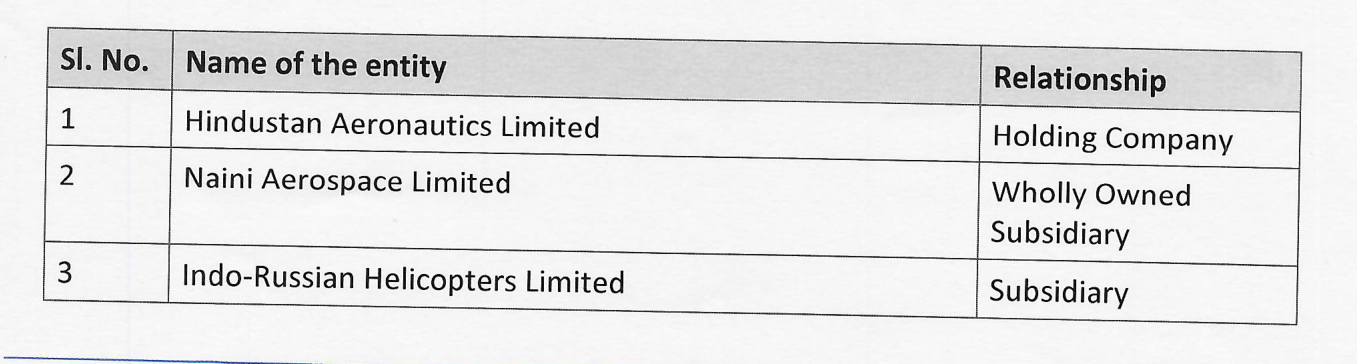
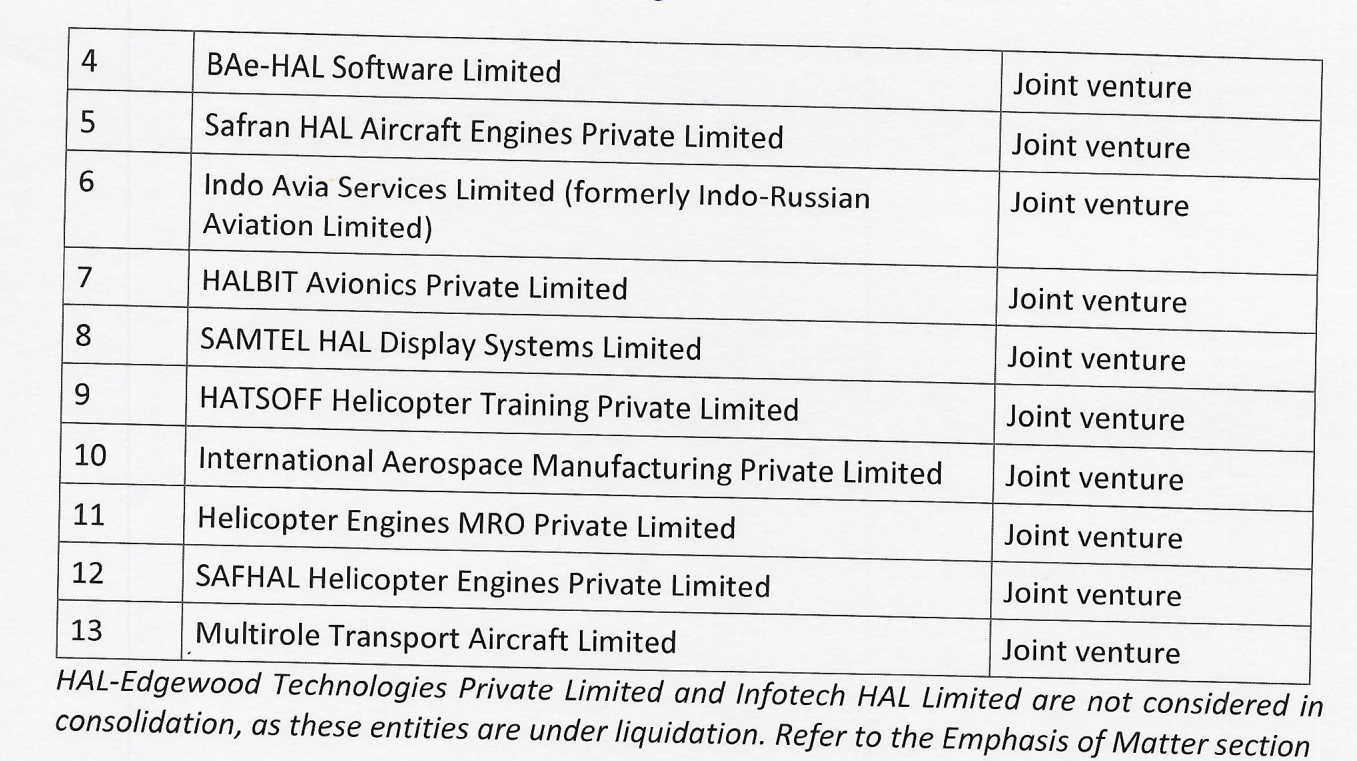
Who buys it: the Indian Air Force, Army, Navy and Coast Guard, under contracts priced by a government committee rather than negotiated in a market. That single fact drives most of what follows.
What the filing does not disclose: there is no segment breakdown at all. A Ministry of Corporate Affairs notification of 23 February 2018 exempts government defence companies from Ind AS 108 (page 11). So you cannot see new-build revenue against repair and overhaul, nor the margin on either. There is no order-book figure anywhere in the filing, and no product photographs: this is a results statement, not a presentation.
Read the rest of this report
The full report continues below - the figures, the numbers with their page references, and what the document does not say.
- Every figure traced to the page it came from
- Charts and tables taken straight from the document
- What the filing discloses about its own risks
- New reports every week, and on every mainboard IPO
Already subscribed? Sign in with the same Google account.
Information only. ForgeUp is not registered with SEBI as a Research Analyst or an Investment Adviser. This report is educational and informational, is based on the document named above, and is not a recommendation to apply for, buy, sell or hold any security. Figures are as stated in the source document and may be restated or superseded. Securities investment is subject to market risk; read all offer documents carefully. See our disclaimer.