ForgeUp Prime · IPO Report
Bombay Coated & Special Steels IPO — what the RHP actually says₹183.06 crore, entirely fresh capital, bidding 29 October to 2 November 2026 at a band of ₹78–82. The promoters are selling nothing — and the issue is priced below what the last outside investors paid for the same shares a year ago.
About this report. Built from the Red Herring Prospectus dated 21 October 2026 (599 pages), filed with SEBI and the exchanges. The document is 10 days old, so it is current. Every figure below is as stated in that RHP, in ₹ million — the RHP's own words are “All figures have been expressed in millions” (p.28). Ten million is one crore, so we divide by 10 to show crore. Figures from news reports are kept in their own clearly-marked section and never mixed into the tables from the document.The 60-second read
- Nobody is cashing out. There is no offer for sale at all. All ₹183.06 crore is new money going into the company, and the promoters sell zero shares. That is uncommon and it is the single most shareholder-friendly fact in this document.
- But two-thirds of it just pays off loans. ₹125.00 crore of the ₹183.06 crore (68.3%) repays borrowings. Only ₹15.77 crore (8.6%) buys equipment. Paying down debt lowers risk; it does not add a single tonne of capacity.
- The headline P/E is not the comparable one. ₹82 ÷ FY26 earnings per share of ₹7.64 gives 10.7 times — the number most sites will print. That ₹7.64 was earned on the pre-IPO share count. Spread the same profit over the share count after the new shares are issued — the basis on which the RHP's own three peers are quoted — and it is 16.9 times.
- The last outside money paid more than you are being asked to. On 28 October 2025, outside investors bought 9,00,091 shares at ₹88. The cap price is ₹82 — 6.8% below that. The promoters' own blended cost is about ₹2.50 a share.
- Two names decide this company's fate. One supplier, JSW, provided 85–91% of all steel coil across every period shown. One customer, Amber Enterprises, is roughly 20% of revenue, and the top five are 55.4%.
- Profit is not turning into cash. Across FY24–FY26, every ₹100 of reported profit produced ₹67 of actual operating cash. In FY26 alone it produced just ₹33. The money went into inventory.
What they actually make
Bombay Coated & Special Steels buys large coils of steel — think of a roll of steel hundreds of metres long — and cuts them into the exact flat pieces that appliance factories need. It does not make steel. It does not make appliances. It sits in between, and it is paid for the cutting.
Four processes, named in the RHP: slitting (cutting a wide coil lengthwise into narrower coils), cut-to-length (unrolling a coil and cutting it into flat sheets), embossing (pressing a pattern into the surface) and shearing (cutting sheets to a final size). The output is flat steel sheets and blanks, stacked, strapped and sent to a factory where they become the side panel of an air conditioner or the body of a refrigerator.
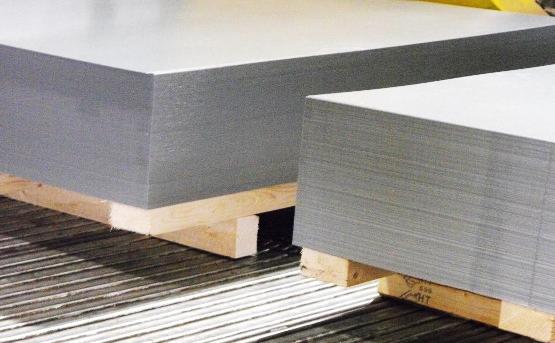
Cut-to-length sheets
A coil unrolled, flattened and cut into rectangular sheets of an exact size. This is the bulk of what leaves the plant. RHP p.259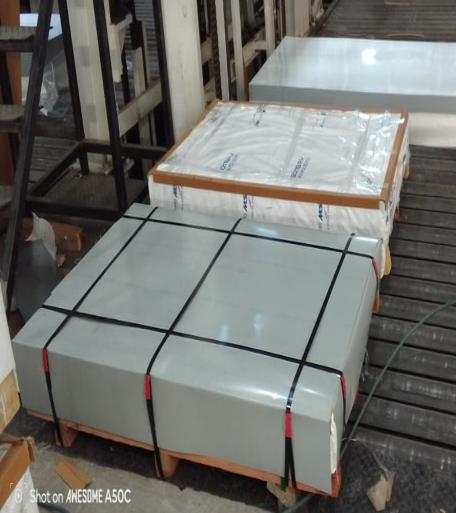
Packed blanks, ready to ship
Finished pieces wrapped, strapped to a wooden pallet and dispatched straight into a customer's production line. RHP p.259
Who actually pays them
The customers are the contract manufacturers who build appliances for the brands you know. The RHP names them: Amber Enterprises, Western Refrigeration, Haier Appliances India, PG Technoplast, Dixon Electro Manufacturing and EPack Durable. These are the companies that assemble air conditioners and refrigerators for other people's brand names.
Why this matters This is an air-conditioner and refrigerator supply-chain business wearing a steel company's name. Its volumes rise and fall with how many ACs India buys. The RHP says so directly: demand from its end-use sectors “is subject to seasonality and cyclicality” and air-conditioner sales are “generally concentrated during the summer” (p.33, p.45). April to June — the quarter the RHP shows as its most profitable — is peak season.Where the plants are
Four manufacturing facilities, deliberately placed next to the customers' own factories so sheets can be delivered just in time: Wada and Bhiwandi in Maharashtra, Ghiloth in Rajasthan (on the Delhi–Jaipur highway, serving the Gurgaon–Noida cluster) and Sri City in Andhra Pradesh (serving Chennai). Plus a warehouse at Dera Bassi, Punjab.
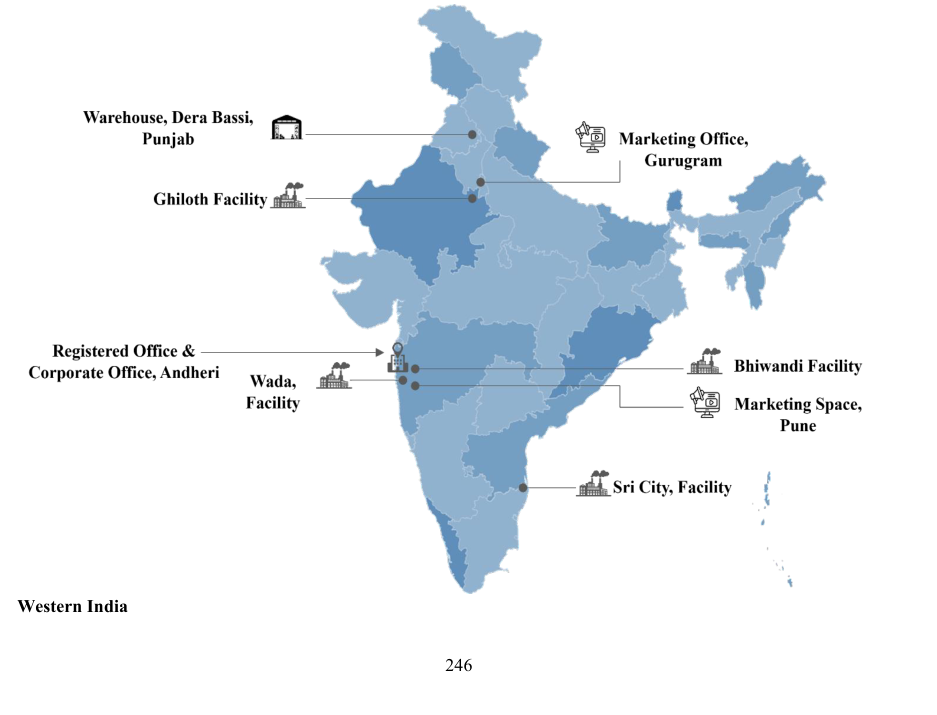
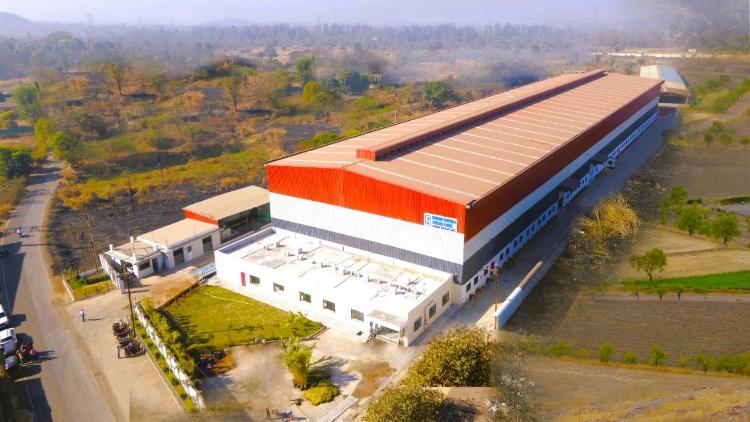
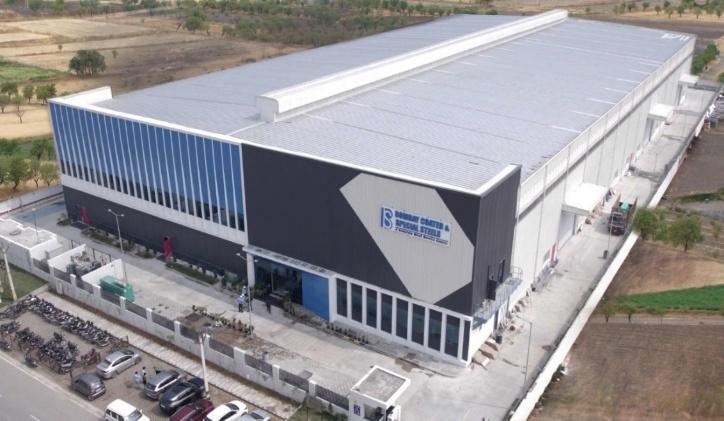
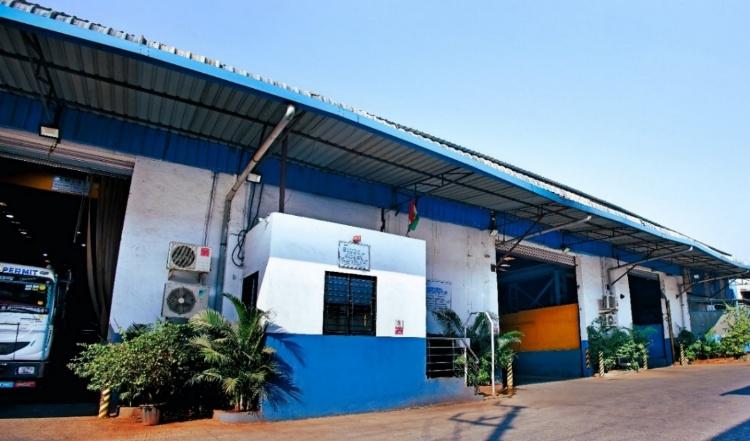
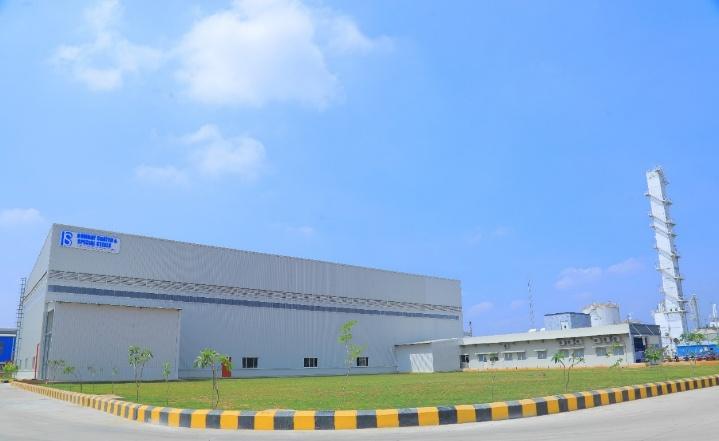
The plants ran at roughly 59% of capacity in FY26 — 2,72,011 tonnes produced against 4,62,411 tonnes of installed capacity across the four lines (RHP p.132). Headcount is 160 permanent employees plus 4 on retainership (p.269). Staff turnover has been falling sharply: 44.21% in FY24, 32.13% in FY25, 26.10% in FY26 (p.45).
A units error in the document The capacity table in the risk factors (p.42) is headed “Unit: Million Tonnes Per Annum”. The figures beneath it — 1,44,258 for slitting — are plainly tonnes, not millions of tonnes, and the company's own KPI table on p.132 confirms it by labelling the identical numbers “Metric Tons (MT)”. Read at face value the first table would describe a plant larger than India's entire steel industry. We use the MT figures.Read the rest of this report
The full report continues below — the figures, the numbers with their page references, and what the document does not say.
- Every figure traced to the page it came from
- Charts and tables taken straight from the document
- What the filing discloses about its own risks
- New reports every week, and on every mainboard IPO
Already subscribed? Sign in with the same Google account.
Information only. ForgeUp is not registered with SEBI as a Research Analyst or an Investment Adviser. This report is educational and informational, is based on the document named above, and is not a recommendation to apply for, buy, sell or hold any security. Figures are as stated in the source document and may be restated or superseded. Securities investment is subject to market risk; read all offer documents carefully. See our disclaimer.