
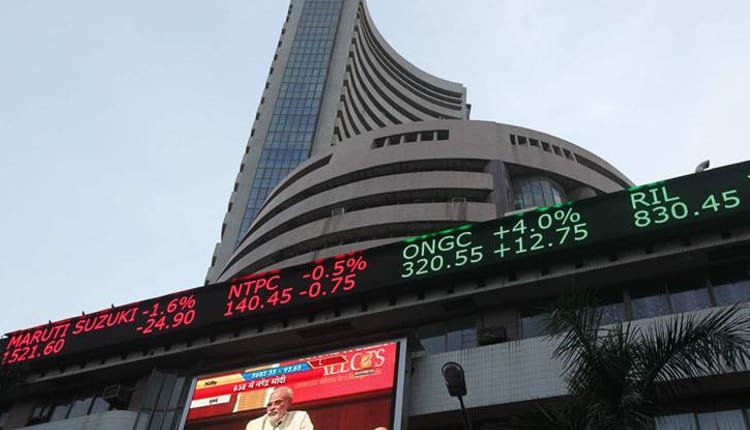
In a development that sent ripples across the Indian financial landscape, the BSE (Bombay Stock Exchange) reportedly surpassed the National Stock Exchange (NSE) in notional futures and options (F&O) turnover for April 2026. This marked a historic moment, as BSE’s share of notional F&O turnover surged to 55.4% from 43.6% in March, while NSE’s declined to 44.6%. However, for the astute investor, it’s crucial to look beyond the headlines and understand why this “win” in notional turnover might be a misleading indicator of market dominance and profitability.
Quick Highlights: The Latest Big Numbers
- BSE Notional F&O ADT (April 2026): ₹269.07 lakh crore (approx. $31.7 billion), up nearly 20% month-on-month.
- NSE Notional F&O ADT (April 2026): ₹216 lakh crore (approx. $25.4 billion), down about 26% month-on-month.
- NSE Options Premium Turnover Share (April 2026): 66%, demonstrating continued dominance.
- BSE Options Premium Turnover Share (April 2026): 34%, despite leading in notional turnover.
- BSE Futures Transaction Fees: Zero, significantly lower than NSE’s charges.
Key Market Data (Live: May 06, 2026)
| Metric | Latest Value | Trend |
|---|---|---|
| Nifty 50 Index | 24,140.30 | ▲ 0.45% |
| Sensex Index | 77,288.07 | ▲ 0.35% |
| 52W High (Nifty 50) | 26,373.20 | (NSE Data) |
| 52W Low (Nifty 50) | 22,182.55 | (NSE Data) |
| Market Cap (BSE) | ₹466.94 lakh Cr | (Approx. $5.5 Tn) |
Why It Happened: The Big May 06, 2026 Triggers
For Indian retail investors, understanding the nuances of F&O turnover is critical, especially when comparing exchanges. The recent surge in BSE’s notional turnover is a story of strategic shifts and cost advantages.
1. Aggressive Fee Structure by BSE?
A primary driver behind BSE’s gain in notional F&O turnover is its significantly lower transaction fees. BSE charges zero fees on futures contracts, a stark contrast to NSE’s 0.00183% (₹1.83 per ₹1 lakh). Similarly, for options, BSE levies a mere 0.005% (₹5 per ₹1 lakh) compared to NSE’s 0.0355% (₹36 per ₹1 lakh) on stock options. This cost advantage has incentivized active traders and high-frequency participants to shift volumes to BSE, particularly in a market where overall risk appetite might be moderating.
2. Strategic Expiry Day Shift and Regulatory Support?
BSE strategically shifted its weekly expiry day for Sensex contracts from Tuesday to Thursday. This move, coupled with the market regulator SEBI’s decision to limit exchanges to one weekly expiry per index, worked to BSE’s advantage. By offering a different expiry day, BSE carved out a unique space, attracting traders who prefer Thursday expiries, which were previously dominated by NSE’s Bank Nifty.
3. The “Notional” vs. “Premium” Turnover Conundrum?
While BSE’s notional turnover figures appear impressive, they represent the total contract value, which often includes significant leverage. The more revenue-relevant metric for an exchange, however, is options premium turnover, which reflects the actual cash exchanged in options trades. As Vipin Kumar, Assistant Vice-President of Equity Research at Globe Capital Market, pointed out, “BSE’s lower transaction charges incentivised a shift from NSE”. This shift, however, hasn’t translated into a comparable gain in actual revenue-generating activity for BSE.
Market Context: What the Broader Trend Says
The Indian derivatives market is undergoing a fascinating transformation, with BSE making significant inroads into a segment historically dominated by NSE. However, the narrative of BSE “overtaking” NSE needs careful consideration. While BSE’s notional average daily turnover in F&O grew nearly 20% month-on-month to ₹269.07 lakh crore in April, NSE’s notional ADT fell about 26% to ₹216 lakh crore.
Despite this, NSE continues to hold a commanding 66% share in options premium turnover, compared to BSE’s 34%. This difference is crucial, as premium turnover is a closer proxy for the actual money changing hands and, consequently, for the exchanges’ revenue from transaction fees. On May 05, 2026, both the Nifty 50 and Sensex showed positive movement, indicating a broadly supportive market environment, but the underlying F&O dynamics between the exchanges highlight strategic competition. The question remains: can BSE convert its notional volume gains into a substantial increase in premium turnover and, by extension, profitability?
What It Means for Investors
For you, the Indian retail investor, the distinction between notional and premium F&O turnover is paramount. While headlines touting massive notional turnover might create an illusion of intense activity, it’s the premium turnover that truly reflects the monetary value of derivatives trading. Are you paying attention to the right metrics when assessing market activity?
The shift in F&O volumes to BSE, primarily driven by lower costs, presents both opportunities and considerations. While lower transaction fees on BSE might reduce your trading costs, the liquidity and depth of the market, especially for less common contracts, remain critical factors. NSE’s continued dominance in premium turnover suggests that a significant portion of serious, high-value options trading still occurs on its platform. You should also be aware that SEBI has increased lot sizes for index derivatives to ensure contract values are within ₹15 lakh to ₹20 lakh, aiming for better risk management. This affects the capital required for F&O positions, regardless of the exchange.
Frequently Asked Questions
1. Did BSE truly overtake NSE in F&O turnover in April 2026?
Yes, BSE surpassed NSE in notional F&O turnover in April 2026, with its share rising to 55.4% compared to NSE’s 44.6%. However, NSE still dominates in options premium turnover.
2. What is the difference between notional and premium turnover in F&O?
Notional turnover represents the full contract value of a derivatives trade, which can be very large due to leverage. Premium turnover, conversely, is the actual premium amount exchanged in options contracts, reflecting the real money involved and is considered a better indicator of an exchange’s revenue-generating activity.
3. Why is BSE gaining market share in F&O?
BSE’s market share gain in notional F&O turnover is largely attributed to its competitive fee structure (zero fees on futures, lower fees on options), a strategic shift of its weekly expiry day to Thursday, and a regulatory decision limiting exchanges to one weekly expiry per index.
4. Does higher notional turnover automatically mean higher profitability for an exchange?
No, higher notional turnover does not automatically translate to higher profitability. Exchanges primarily earn revenue from transaction fees, which are often based on premium turnover. Despite BSE’s lead in notional turnover, NSE still holds a significant 66% share in the more profitable options premium turnover.
Conclusion: The Big Picture
The headlines proclaiming BSE’s ascendancy over NSE in F&O turnover, while factually correct regarding notional value, paint an incomplete picture. The true measure of an exchange’s derivatives business lies not just in the colossal notional figures, but in the more tangible premium turnover, where NSE continues its formidable lead. As the Indian derivatives market evolves, driven by competitive pricing and regulatory changes, investors must delve deeper than surface-level statistics to truly grasp the underlying dynamics and revenue implications for both exchanges. The battle for derivative market dominance is far from over, and its real story unfolds in the premiums, not just the notional values.
Disclaimer: The views expressed are for informational purposes only and do not constitute financial advice. Investing in stocks and IPOs involves significant risk. forgeup.in is not liable for any financial losses. Always consult a certified investment advisor before making any decisions.