
The Indian fintech and insurtech landscapes are witnessing an aggressive wave of primary market entries. Following the confidential pre-filing route that defined several late-2025 consumer-tech draft prospects, Turtlemint Fintech Solutions Limited has officially filed its Red Herring Prospectus (RHP) with SEBI. The Mumbai-headquartered platform has scheduled its initial public offering (IPO) subscription window to launch on Friday, June 19, 2026, and close on Tuesday, June 23, 2026, with the official anchor book bidding session taking place a day earlier on Thursday, June 18.
Turtlemint enters the mainboard arena as a prominent digital insurance distribution ecosystem, setting up a direct listed matchup against incumbent market giant PB Fintech (Policybazaar). For market participants assessing capital allocation within high-growth financial technology indices, this detailed review covers the company’s issue architecture, proprietary advisor model, financial performance, core operational risks, and pre-issue valuation lines.
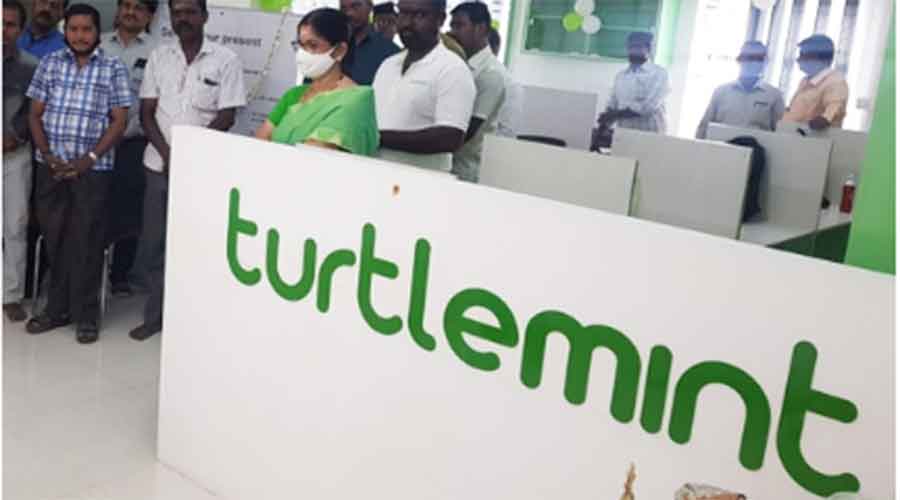
1. The IPO Scorecard: Issue Architecture & Strategic Timelines
The book-built issue is structurally configured to raise up to ₹882.66 Crore, balancing a heavy fresh fundraise to update product capabilities with an exit route for early venture backers.
Key Offer Parameters & Allotment Framework
| Offering Parameter | Specification & Capital Metric Details |
| IPO Subscription Window | Friday, June 19, 2026 – Tuesday, June 23, 2026 |
| Price Band Range | ₹144 to ₹152 per equity share (Face Value: ₹1) |
| Total IPO Issue Size | Aggregating up to ₹882.66 Crore (At Upper Band) |
| Fresh Issue Component | Fresh equity issuance valued up to ₹660.72 Crore |
| Offer for Sale (OFS) | 1.46 Crore Equity Shares (Aggregating ~₹221.94 Crore) |
| Minimum Application Lot | 98 Equity Shares per Lot |
| Minimum Retail Capital | 98 Shares / ₹14,896 Minimum Allocation (Upper Band) |
| Institutional Allocations | 75% Max to QIB / 15% to NII (HNI) / 10% to Retail |
| Book Running Lead Managers | ICICI Securities, Jefferies India, JM Financial, Motilal Oswal |
| Proposed Market Listing | Monday, June 29, 2026 (BSE & NSE Mainboard) |
Strategic Reinvestment vs. Venture Liquidation
Turtlemint’s offering is anchored by its Fresh Capital Component (75% of total issue size / ₹660.72 Cr). The net cash raised will be deployed straight into structural growth pipelines rather than floating working capital balances:
- Tech Team Salary Allocation (₹193 Crore): Funding the compensation and scaling requirements of its in-house core product development and technology engineering divisions.
- Subsidiary Capitalization (₹129 Crore): Direct equity investment into its wholly owned corporate subsidiary, TurtleFin (TIB), to grow local licensing footholds.
- Infrastructure & Platform Scaling: Enhancing enterprise cloud resources, server databases, and digital marketing portals.
The remaining ₹221.94 crore represents an Offer for Sale (OFS) providing partial liquidity to co-founders Dhirendra Mahyavanshi (offloading shares worth ₹34 crore) and Anand Prabhudesai (selling shares worth ₹32 crore), alongside Tier-1 private equity backers including Peak XV Partners, Nexus Venture Partners, Blume Ventures, and GGV Capital.
2. Business Model: The PoSP Advisor Flywheel
Founded in 2015, Turtlemint operates a tech-enabled, multi-category insurance marketplace connecting consumers, independent insurance advisors, and large underwriting corporations. Unlike traditional direct-to-consumer models that completely cut out the human agent, Turtlemint pioneered a specialized digital-assisted B2B2C model.
THE TURTLEMINT AGENT FLYWHEEL
- Proprietary App Interface
- Unified platform for Life, Health, and Motor insurance products.
- 400,000+ Certified PoSP (Point of Sale Person) Advisors
- Advisors use the platform to sell and service insurance products.
- End-Consumer Monetization
- Cross-selling additional financial products such as:
- Loans
- Mutual Funds
- Cross-selling additional financial products such as:
The platform’s core operational engine relies on its nationwide network of more than 400,000 certified Point of Sale Person (PoSP) advisors spanning over 19,000 pincodes. Turtlemint equips these local offline agents with proprietary digital tools, automated comparison matrices, and direct issuance portals across 42 insurance partners. This framework allows local advisors to scale their individual books while Turtlemint collects recurring, asset-light commission streams.
To expand its customer value, Turtlemint has diversified past pure motor, life, and health risk products into adjacent wealth management categories, allowing its agents to cross-sell mutual funds and personal loans through a single digital screen.
3. Financial Analysis: High-Velocity Revenues vs. Tech Losses
An assessment of Turtlemint’s restated consolidated financial disclosures shows an impressive top-line growth curve, paired with an expanding loss run-rate as the platform builds scale.
Restated Consolidated Financial Portfolio
| Financial Metric (₹ in Crore) | FY23 (Audited) | FY24 (Audited) | FY25 (Audited) | 9M Ended Dec 2025 (FY26) |
| Total Operating Revenue | ₹419.90 Crore | ₹119.12 Crore* | ₹693.21 Crore | ₹741.00 Crore (+80% YoY) |
| Profit After Tax (PAT) | -₹288.18 Crore | ₹64.41 Crore* | -₹194.11 Crore | -₹187.30 Crore (-25% YoY) |
| Consolidated Net Worth Base | ₹743.45 Crore | ₹563.80 Crore | ₹410.46 Crore | ₹329.95 Crore |
| Total Outstanding Debt | ₹0.00 Crore | ₹0.00 Crore | ₹0.00 Crore | ₹0.00 Crore (Debt-Free) |
(Note: FY24 restated figures reflect major regulatory accounting realignments regarding direct broker commission models under IRDAI guidelines.)
Analyzing the Scale Economics
Turtlemint’s operating revenue experienced an exceptional breakout, with its 9-month FY26 revenue jumping 80% year-on-year to hit ₹741 Crore, surpassing its full-year FY25 revenue performance.
However, because the company is aggressively investing in technology infrastructure, marketing cycles, and advisor onboarding programs, its bottom-line remains in the red. Net losses widened by 25% to ₹187.30 Crore for the 9-month window ended December 2025, compared to a loss of ₹150 crore in the prior-year period. This pattern indicates that while the company’s top-line volume is growing rapidly, it has not yet reached the critical scale required to achieve operating break-even.
4. Balance Sheet Health & Critical Vulnerability Matrix
- Zero Debt Foundation: A key structural benefit on Turtlemint’s balance sheet is its total lack of long-term and short-term debt borrowings (₹0.00 Cr Balance). Operating as a pure equity-funded platform helps reduce structural insolvency risks.
- Cash Flow Burn Trends: Because the company operates with an unprofitability baseline, cash used in operating activities tracked at negative ₹215.81 Crore at the close of the recent fiscal cycle, making this ₹660.72 crore fresh public equity injection vital to sustain its long-term technology development outlays.
Critical Vulnerability Matrix
1. Heavy Dependency on PoSP Advisor Activation: Platform growth is highly dependent on the productivity, continuous retention, and daily transaction engagement levels of its independent 400,000+ advisor network.
2. Intense Competitive Pricing Pressures: The insurtech segment is highly competitive, featuring aggressive unlisted players and established listed majors like Policybazaar, which can pressure commission realizations.
3. Exposure to Evolving IRDAI Regulations: Digital financial intermediaries operate under strict regulatory supervision. Any structural revisions regarding broker commission structures, PoSP compliance rules, or data protection laws can elevate operational overheads.
5. Pre-Issue Strategic Verdict
At the upper price band of ₹152 per equity share, Turtlemint Fintech Solutions Limited’s post-issue market capitalization is estimated at approximately ₹4,513.10 Crore ($475 Million).
Evaluating a loss-making tech platform requires shifting focus away from traditional Price-to-Earnings (P/E) multiples to look at Price-to-Sales (P/S) ratios. Based on an annualized FY26 revenue run-rate approaching ~₹988 crore, Turtlemint’s implied market cap values the firm at a Forward P/S multiple of ~4.5x. Compared to its listed peer PB Fintech, which regularly commands trailing market revenues multiples over 10x to 12x, Turtlemint’s IPO pricing appears to factor in its current loss run-rate, offering a more reasonable entry multiple for mainboard participants.
Strategic Investment Verdict: High-Risk Growth Subscribe.
Turtlemint Fintech Solutions offers a compelling high-beta growth proposition for institutional and retail investors seeking direct exposure to India’s under-penetrated digital insurance distribution space. The company’s unique advisor-led PoSP marketplace has demonstrated impressive volume velocity, as evidenced by its 80% revenue breakout to ₹741 crore. While its widening net losses and negative operating cash flows require caution, its clean debt-free balance sheet and a more accessible 4.5x forward P/S multiple offer a calculated risk-reward window. Monitoring anchor institutional bidding demand on June 18 will reveal final market sentiment, but for long-term tech portfolios, backing Turtlemint’s massive agent distribution flywheel provides a solid opportunity to capture market share alongside India’s multi-decade insurtech financialization trend.
Disclaimer: The views expressed are for informational purposes only and do not constitute financial advice. Investing in stocks and IPOs involves significant risk. forgeup.in is not liable for any financial losses. Always consult a certified investment advisor before making any decisions.