
Polycab India vs KEI Industries: The Indian wires and cables industry has undergone a paradigm shift over the last decade, transitioning from a fragmented, unorganized commodity market into a high-tech, branded necessity. As of April, 2026, the two titans of this sector-Polycab India Ltd and KEI Industries Ltd-are locked in a fierce battle for market leadership. While both companies have benefited from the Indian government’s ₹111 lakh crore National Infrastructure Pipeline and the surge in high-rise residential construction, their business models, market strategies, and financial profiles offer distinct choices for investors.
In this comprehensive analysis, we break down the fundamentals, operational efficiencies, and strategic roadmaps of Polycab and KEI to determine which company holds the edge in the 2026 fiscal landscape.
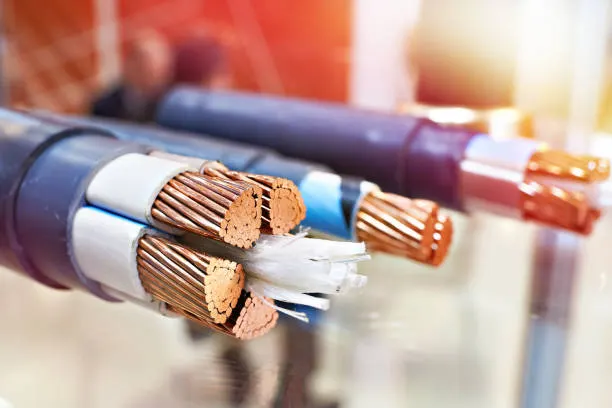
Polycab India vs KEI Industries 2026: Key Differences, Financial Metrics & Investor Verdict
Market Positioning and Product Mix
Although both companies operate in the same sector, their “DNA” is fundamentally different. Polycab has successfully transitioned into a consumer-facing giant, while KEI remains the preferred choice for heavy-duty industrial and institutional projects.
Polycab India: The B2C Powerhouse
Polycab is the largest manufacturer of wires and cables in India, with a market share of approximately 25–26% in the organized segment.
- Consumer Orientation: Polycab has spent the last five years aggressively building its FMEG (Fast Moving Electrical Goods) portfolio, which includes fans, LED lighting, switches, and solar pumps. This makes Polycab a “household brand.”
- Distribution Moat: With over 4,300+ authorized dealers and 200,000+ retail outlets, Polycab’s reach into Tier-2 and Tier-3 cities is significantly deeper than KEI’s.
KEI Industries: The Institutional Specialist
KEI is the second-largest player but holds a superior reputation in the Extra High Voltage (EHV) cable segment.
- Complex Engineering: KEI specializes in high-margin, technically complex cables used in power plants, refineries, and metro rail projects. They are one of the few Indian companies capable of manufacturing 400kV EHV cables.
- The B2B Focus: While KEI is trying to increase its retail presence, its core strength remains its deep-rooted relationships with government bodies (like PGCIL) and private industrial giants.
Polycab India vs KEI Industries: Financial Performance and Efficiency (FY26)
In the fiscal year ended March 31, 2026, both companies reported record revenue, but their profitability margins tell different stories.
Key Financial Metrics (April 2026)
| Metric | Polycab India Ltd | KEI Industries Ltd |
| Market Capitalization | ~₹1.05 Lakh Crore | ~₹42,500 Crore |
| P/E Ratio (Trailing) | ~52x | ~44x |
| Revenue Growth (YoY) | ~28% | ~22% |
| EBITDA Margin | 13.8% – 14.5% | 10.5% – 11.2% |
| ROE (%) | ~21.5% | ~19.8% |
| Debt-to-Equity | 0.05 (Nearly Debt-Free) | 0.12 (Low Debt) |
Analysis of Margins: Polycab consistently commands higher EBITDA margins than KEI. This is largely because Polycab’s B2C (Retail) segment allows for higher pricing power. KEI, being more B2B-heavy, often has to participate in competitive bidding for government projects, which naturally caps their profit margins.
Operational Scale and Capex (2026-2028)
To maintain growth in a 2026 economy that is hungry for electricity, both companies are in the middle of massive capital expenditure (Capex) cycles.
Polycab’s “Project Leap”
Polycab is executing its “Project Leap,” aiming for a revenue of ₹20,000 crore by FY27.
- Vertical Integration: Polycab manufactures its own copper rods and aluminum wires, giving it a massive cost advantage. In 2026, the company successfully commissioned its new high-voltage cable plant in Gujarat, further encroaching on KEI’s industrial territory.
KEI’s Capacity Surge
KEI is currently investing nearly ₹1,000 crore in a new Greenfield facility in Gujarat.
- EHV Dominance: KEI’s focus for 2027 is to triple its EHV cable capacity. As India transitions to smart grids and underground cabling in metros, the demand for EHV cables is expected to grow at a CAGR of 15%, and KEI is the primary beneficiary here.
Polycab India vs KEI Industries: Fundamental Strengths and Risks
Why Polycab Wins on Distribution
Polycab’s ability to sell “lifestyle” products (fans/lighting) alongside “safety” products (wires) creates a “bundle effect” for distributors. In 2026, Polycab’s FMEG segment has finally turned profitable after years of investment, providing a second engine of growth that KEI lacks.
Why KEI Wins on Complexity
If you are building a nuclear power plant or a deep-sea oil rig, you choose KEI. Their “technological moat” is harder to replicate. While Polycab is a marketing giant, KEI is an engineering specialist. In the 2026 market, as the “China + 1” strategy leads global companies to source high-end cables from India, KEI’s export certifications give it an edge in the US and European markets.
Key Risks for 2026:
- Commodity Price Volatility: Both companies are highly sensitive to Copper and Aluminum prices. While Polycab manages this via inventory hedging, a sudden 20% spike in copper could hurt short-term margins.
- The “IT Search” Legacy: Polycab faced an Income Tax search in early 2024. While the management has cleared most queries by 2026, any residual regulatory action remains a “tail risk” for the stock’s valuation.
- Real Estate Slowdown: Since 40% of wire demand comes from new housing, any hike in interest rates by the RBI in late 2026 could dampen demand for both companies.
Polycab India vs KEI Industries: Shareholding and Institutional Interest
Institutional confidence in the “Wires & Cables” theme is at an all-time high in April 2026.
- Promoters: Polycab’s promoters hold ~63%, while KEI’s promoters hold ~37%. The higher promoter holding in Polycab often results in lower liquidity but higher price stability.
- FIIs and DIIs: Both stocks are “institutional favorites.” In 2026, foreign investors have slightly favored KEI due to its lower P/E ratio, viewing it as a “Value Play,” while domestic mutual funds have favored Polycab as a “Growth-at-any-Price” play.
Also read about TVS Motor vs Hero MotoCorp
Strategic Outlook for FY27
As both companies look toward the 2027 fiscal year:
- Digital Transformation: Polycab has implemented AI-driven demand forecasting to reduce its “Working Capital Cycle” to 85 days.
- Solar Pivot: KEI is aggressively launching specialized DC cables for solar farms. With India’s 2026 target of 300GW of renewable energy, this segment is expected to be the fastest-growing part of KEI’s order book.
- FMEG 2.0: Polycab is expected to enter the “Smart Home” segment in late 2026, launching IoT-enabled switches and home automation kits.
Frequently Asked Questions(FAQ)
Is Polycab better than KEI for long-term investors?
Historically, Polycab has provided better returns due to its retail expansion. However, in 2026, KEI is growing its retail segment faster than Polycab is growing its industrial segment, making the gap between the two much narrower than before.
Does the tax search on Polycab still matter in 2026?
Most of the market has “priced in” the tax search. By April 2026, the company has improved its internal compliance and audit standards, and the stock has returned to its premium valuation levels.
Which company has less debt?
Both are exceptionally well-managed. Polycab is virtually net debt-free. KEI has small amounts of debt related to its new Gujarat plant expansion, but its interest coverage ratio remains very healthy at over 15x.
Conclusion: Which One Leads in 2026?
The “Polycab vs. KEI” debate is a classic battle between Retail Scale and Industrial Precision.
- Invest in Polycab India if you want a “Consumer Play.” It is the dominant market leader with superior margins, an unmatched distribution network, and a successful diversification into FMEG. It trades at a premium valuation because it offers the safety of a household brand.
- Invest in KEI Industries if you want an “Industrial Play.” It is the specialist in high-margin EHV cables and is currently at a sweet spot in its Capex cycle. With a lower P/E and a focus on high-end exports, it offers more “Alpha” potential if its Greenfield expansion goes live on schedule in 2027.
In 2026, Polycab remains the “Core Portfolio” stock for stability, while KEI is the “Growth Pick” for those betting on the second phase of India’s industrial revolution.
Disclaimer: The views expressed are for informational purposes only and do not constitute financial advice. Investing in stocks and IPOs involves significant risk.
forgeup.in is not liable for any financial losses. Always consult a certified investment advisor before making any decisions.