
Fundamental Analysis of Vedanta: Vedanta Limited is currently undergoing one of the most significant corporate transformations in the Indian resource sector. As of May, 2026, the company has successfully transitioned through its demerger record date (May 1, 2026). It is shifting from a single diversified conglomerate to a group of five specialized, sector-leading businesses.
The stock is currently in a “Price Discovery” phase following the demerger ex-date. While the “Residual Vedanta” (primarily Zinc and Hindustan Zinc) is trading at adjusted levels, the group’s fundamentals remain robust, backed by a record-breaking Q4 FY26 performance and a significantly strengthened balance sheet.
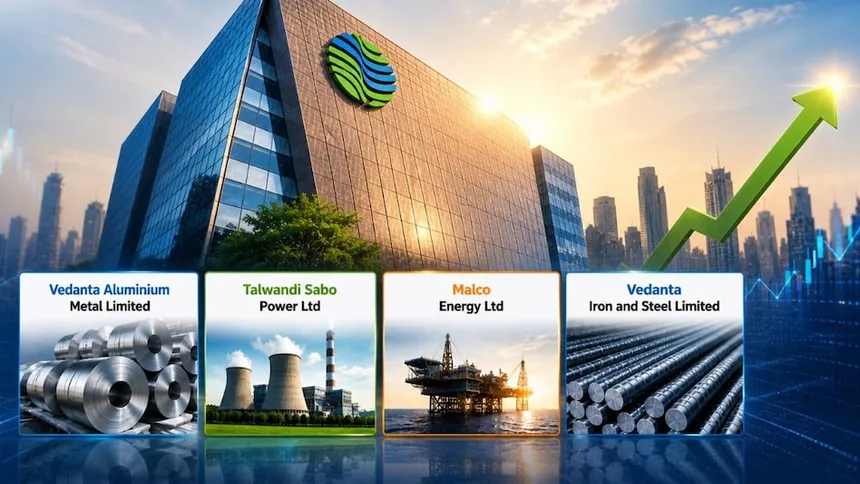
Fundamental Analysis of Vedanta: 5-Way Demerger, 89% Profit Jump & ₹800 Sum-of-Parts Value — Is May 2026 the Turning Point?
The Demerger: Unlocking “Sum-of-the-Parts” Value
The demerger, effective May 1, 2026, splits Vedanta into five independently listed entities. This move is designed to eliminate the “conglomerate discount” and allow investors to pick specific commodity exposures.
A. The Five New Entities
Investors holding Vedanta on the record date are being allotted shares in a 1:1 ratio across the following:
- Vedanta Aluminium: India’s largest aluminium producer, benefiting from integrated supply chains.
- Vedanta Oil & Gas: Focused on Cairn India assets with a push toward 50% of India’s domestic production.
- Vedanta Power: Focused on a 3.5 GW portfolio and renewable energy transitions.
- Vedanta Iron & Steel: Integrated mining and value-added steel operations.
- Vedanta Ltd (Residual): Primarily holds the 64.9% stake in Hindustan Zinc, along with the semiconductor and display glass ventures.
B. Listing Timeline
- Share Credit: Eligible shareholders began receiving shares of the four new entities in their Demat accounts between May 8 and May 11, 2026.
- Stock Market Debut: The four new entities are expected to list on the NSE and BSE in late June or early July 2026, subject to final SEBI approvals.
Fundamental Analysis of Vedanta: Financial Performance – FY26 Record Results
The Q4 FY26 results (announced April 29, 2026) show a company entering its new phase from a position of peak operational strength.
| Metric | Q4 FY26 (Actual) | FY26 (Full Year) | Trend |
| Revenue | ₹51,524 Crore | ₹1,74,075 Crore | ▲ 29% YoY (Q4) |
| Net Profit (PAT) | ₹9,352 Crore | ₹25,096 Crore | ▲ 89% YoY (Q4) |
| EBITDA Margin | 44% | ~32% | Record High |
| Net Debt/EBITDA | 0.95x | — | Best in 14 Quarters |
| Free Cash Flow | ₹11,930 Crore | ₹26,013 Crore | ▲ 53% YoY (Q4) |
B. Dividend Strategy
Vedanta remains one of India’s most aggressive dividend payers.
- FY26 Total Payout: The company distributed a total of ₹34 per share across three tranches in FY26.
- Strategic Shift: Post-demerger, the dividend strategy is expected to become more entity-specific. Hindustan Zinc remains the primary cash cow for the residual entity, while the Aluminium and Oil & Gas businesses will now prioritize reinvesting their massive EBITDA into capacity expansion.
Commodity Cycles: The Fundamental Moat
Vedanta’s 2026 performance is driven by its “low-cost” positioning across the LME (London Metal Exchange) cycle.
- Aluminium Cost Compression: The aluminium business reported its lowest cost of production in five years in Q4 FY26, driven by coal block operationalization and alumina refinery ramp-ups.
- Zinc Leadership: Through Hindustan Zinc, Vedanta maintains a global first-quartile cost position. Zinc prices have remained resilient in 2026 due to supply constraints in Europe.
- Oil & Gas Resilience: Average production of 87.2 kboepd and new gas discoveries in the West Coast region provide a stable cash-flow hedge against metal price volatility.
Fundamental Analysis of Vedanta: Debt & Credit Profile – The “Watch” List
Despite the strong earnings, debt at the parent level (Vedanta Resources Ltd – VRL) remains a monitorable.
- VRL Debt Reduction: VRL has reduced its external debt to ~$4.8 billion as of late 2025, down from $5.6 billion in 2024.
- Credit Rating: As of May 6, 2026, ICRA has placed Vedanta on a “Rating Watch with Developing Implications” (AA/A1+). This is a technical status until the final allocation of assets and liabilities across the five new entities is completed by June 30, 2026.
Also read about Fundamental Analysis of Yes Bank
Risks and Headwinds: The 2026 Bear Case
- Execution Risk: The final listing of the four new entities must happen by the June 2026 deadline. Any regulatory delay could lead to temporary liquidity issues for shareholders.
- Commodity Volatility: While current prices are favorable, a global recessionary shock in late 2026 could squeeze margins just as the new entities start their independent journeys.
- Semiconductor Burn: The “Residual Vedanta” is the vehicle for the semiconductor and display glass venture. This is a high-capex, long-gestation business that may drag on the parent company’s cash flows for several years.
Frequently Asked Questions(FAQ)
What happened to my Vedanta shares after May 1, 2026?
Your existing shares of Vedanta Ltd remain in your account, but the price has been adjusted downward to reflect the “Residual” value. You have been allotted one new share in each of the four demerged companies for every one share you held. These will show up in your Demat account but cannot be traded until they list in June/July 2026.
Why is the credit rating on “Watch”?
Ratings agencies like ICRA and CRISIL place companies on “Watch” during demergers to see how the debt is divided. Once the company clearly identifies how much debt and cash each entity holds, it will likely resolve the watch into strong individual ratings for the Aluminium and Zinc businesses.
Is Vedanta still paying high dividends?
Yes, with a total FY26 payout of ₹34/share. However, post-demerger, you will receive separate dividends from different companies. The Zinc business (Residual Vedanta) will likely remain the highest payer.
Conclusion
Is Vedanta a “Buy”? The verdict is “Hold for Value Discovery.” The 1:1 demerger benefit is now behind us. For those who own the stock, the current play is to wait for the June/July listing of the pure-play entities. Analysts estimate a Sum-of-the-Parts (SOTP) valuation of ₹800+ across all five entities, which is significantly higher than the pre-split conglomerate price.
For new investors, “Residual Vedanta” at adjusted prices is effectively a Zinc-and-Semiconductor play. If you want exposure to Aluminium or Power, it is advisable to wait and buy those specific companies once they list independently.
Disclaimer: The views expressed are for informational purposes only and do not constitute financial advice. Investing in stocks and IPOs involves significant risk.
forgeup.in is not liable for any financial losses. Always consult a certified investment advisor before making any decisions.