
Fundamental Analysis of Tata Motors: Strategic Update: As of October 1, 2025, Tata Motors completed its historic demerger. The company now operates as two distinct listed entities:
- Tata Motors Passenger Vehicles Ltd (TMPV): Housing the domestic PV business, Electric Mobility, and Jaguar Land Rover (JLR).
- Tata Motors Commercial Vehicles Ltd (TMCV): Focused on trucks, buses, and small commercial vehicles.
As of May, 2026, Tata Motors Passenger Vehicles (TMPV) is no longer a turnaround story—it is a global execution powerhouse. While the stock has seen a cool-off from its early 2026 highs, trading around ₹340–₹412 across the demerged units, the fundamentals reveal a company hitting its stride in luxury premiumization and mass-market electrification.
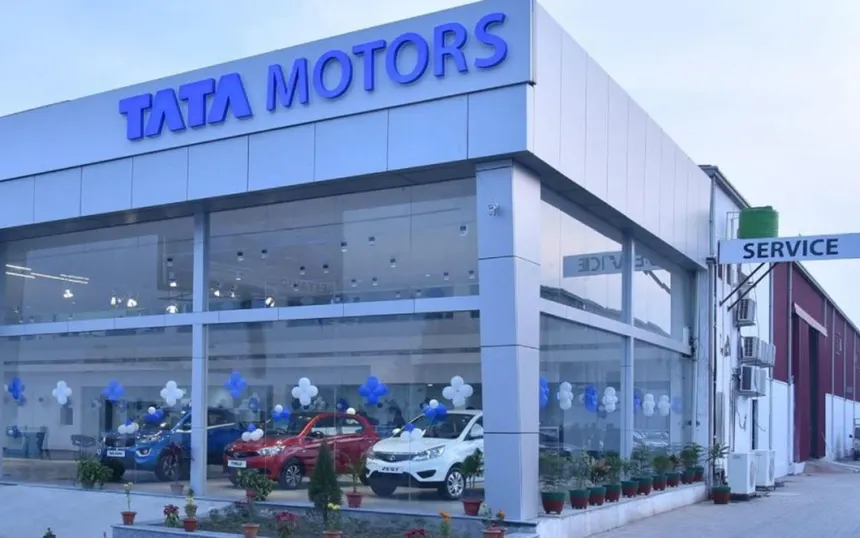
Fundamental Analysis of Tata Motors: EV Leadership, JLR Rebound & What the May 13 Q4 Results Could Unlock
The EV Boom: Scaling from “Niche” to “Mass”
April 2026 sales data confirm that Tata remains the undisputed leader in India’s electric transition.
A. April 2026 Sales Performance
- Total EV Sales: 9,150 units (▲ 72.1% YoY).
- EV Penetration: Electric vehicles now account for 15.3% of Tata’s total passenger vehicle sales.
- Domestic Dominance: Total PV sales (including EVs) stood at 59,701 units for April, marking a 31.1% YoY growth.
B. The “Sierra.ev” Catalyst
The early 2026 launch of the Sierra.ev has been a structural game-changer. By moving Tata into the premium EV lifestyle segment, the company has successfully expanded its “Average Selling Price” (ASP) and attracted a higher-income demographic previously loyal to European luxury brands.
Fundamental Analysis of Tata Motors: Jaguar Land Rover (JLR): The Resilience of Luxury
JLR remains the primary engine of global revenue. After weathering a major cyber incident in late 2025 that halted production, the brand showed a spectacular recovery in the quarter ended March 31, 2026.
A. Recovery in Numbers (Q4 FY26)
- Wholesale Volumes: 95,300 units (▲ 61.1% QoQ). While down 14.5% YoY due to the planned wind-down of legacy Jaguar models, the sequential recovery highlights operational resilience.
- Premium Product Mix: The “House of Brands” strategy is working—Range Rover, Range Rover Sport, and Defender models accounted for 77.1% of total wholesale volumes.
- Jaguar’s Rebirth: The brand is currently in a “transition lull” as it prepares for its 100% all-electric relaunch in late 2026, which is expected to trigger a significant re-rating of JLR’s margins.
Financial Snapshot: May 2026 Performance
Investors are currently awaiting the Q4 FY26 earnings results, scheduled for announcement on May 13, 2026.
| Metric | TMPV (PV & JLR) | TMCV (Commercial) |
| Current Market Price (CMP) | ~₹412.90 | ~₹430.00 |
| Market Capitalization | ~₹1.52 Lakh Cr | ~₹1.58 Lakh Cr |
| P/E Ratio (Trailing) | ~31.66x | ~28.6x |
| ROE (%) | ~19.7% | ~22.4% |
| Debt Status | Net Debt Zero Goal | Low Leverage |
B. The “Net Debt Zero” Milestone
A core pillar of the fundamental analysis is the group’s journey toward being Net Debt Zero. As of March 31, 2026, the company reported outstanding debt securities of only ₹2,300 crore, with a staggered maturity profile through 2028. This represents a massive deleveraging success from the debt levels of the previous decade.
Fundamental Analysis of Tata Motors: Fundamental Moats and Strengths
- Integrated EV Ecosystem: Through Tata Power and Tata Electronics, the group controls the charging infrastructure and semiconductor supply chain, creating a vertical integration moat that competitors like Mahindra or Maruti are still attempting to build.
- First-Mover Advantage: With a 72% YoY jump in EV sales, Tata has secured “mindshare” in the Indian consumer’s psyche as the default choice for electric mobility.
- The Demerger Unlock: By separating the cyclical Commercial Vehicle business (TMCV) from the tech-heavy Passenger/JLR business (TMPV), Tata has allowed investors to value each entity based on its unique cash flow profile.
Also read about Fundamental Analysis of Suzlon Energy
Risks and Headwinds: The 2026 Bear Case
- Geopolitical Volatility: Ongoing West Asian tensions pose a risk to fuel prices and global shipping logistics for JLR’s export markets.
- China Slowdown: Retail volumes in China for JLR were down 34.6% in Q4 FY26, reflecting persistent economic headwinds in the world’s largest luxury car market.
- US Tariffs: Anticipated changes in US trade policies continue to create uncertainty for JLR’s North American wholesale strategy.
Frequently Asked Questions(FAQ)
Why was Tata Motors demerged in 2025?
The demerger allowed the Commercial and Passenger vehicle businesses to operate with independent capital structures. CVs are a cyclical, infrastructure-linked business, while PVs (including EVs and JLR) are a high-growth, technology-driven consumer business.
Is Tata Motors a “debt-free” company now?
The company is on the verge of being Net Debt Zero. While it still has roughly ₹2,300 crore in outstanding debt securities as of March 2026, its massive cash reserves and free cash flow effectively offset these obligations.
What is the major trigger for the stock this month?
The Q4 FY26 Results on May 13, 2026. Watch for dividend declarations and management commentary on the 2027 outlook for Jaguar’s electric relaunch.
Conclusion
Fundamentally, Tata Motors is a “Growth-at-Reasonable-Price” (GARP) story. The stock is currently consolidating as the market digests the demerger and the impact of 2025’s operational disruptions.
For long-term investors, the May 13 earnings announcement will be the ultimate litmus test. If the company confirms it has reached Net Debt Zero and provides a roadmap for the Jaguar electric relaunch, the stock is likely to break out of its current range.
Disclaimer: The views expressed are for informational purposes only and do not constitute financial advice. Investing in stocks and IPOs involves significant risk.
forgeup.in is not liable for any financial losses. Always consult a certified investment advisor before making any decisions.