
Fundamental Analysis of Macrotech Developers: Macrotech Developers Ltd, widely known by its brand name Lodha, is one of India’s largest and most prolific real estate developers. Headquartered in Mumbai, the company specializes in residential and commercial developments, with a dominant market share in the Mumbai Metropolitan Region (MMR) and a growing footprint in Pune and Bengaluru.
As of April 28, 2026, Macrotech Developers has solidified its position as the “aggressive growth” leader of the Indian realty sector. In an environment where the Nifty Realty Index has seen a multi-year bull run, Lodha has distinguished itself through a radical transformation of its balance sheet—moving from a debt-heavy developer to a capital-light, high-efficiency “brand powerhouse.” In the 2026 market, the company is reaping the rewards of the “premiumization” trend, where high-income Indian buyers are gravitating toward trusted, branded luxury housing.
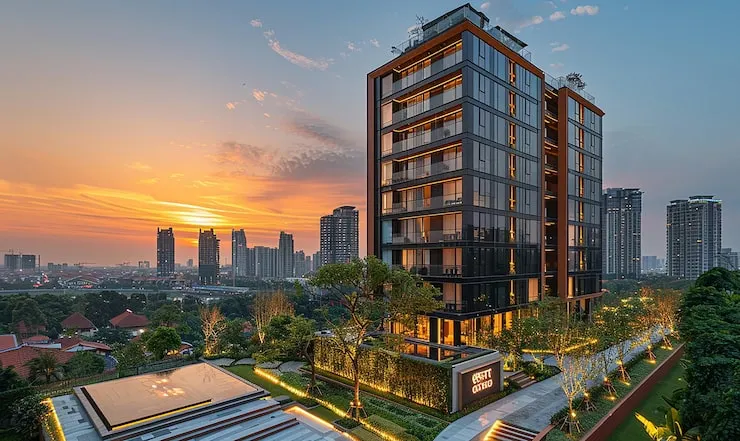
Fundamental Analysis of Macrotech Developers April 2026: Sales Growth, Debt Reduction and Realty Strength Explained
Business Model: The Shift to Capital-Light Growth
The fundamental story of Macrotech Developers in 2026 is defined by its transition to an Asset-Light/Capital-Light model. Historically, real estate giants grew by buying massive tracts of land, which trapped capital and led to high debt. Lodha has pioneered a different path.
A. JDA-Led Expansion (Joint Development Agreements)
Instead of buying land outright, Macrotech now focuses on JDAs. They partner with existing landowners, where the landowner provides the land and Lodha provides the brand, the design, the construction expertise, and the sales machinery.
- Impact: This allowed the company to add a project pipeline worth over ₹20,000 crore in FY26 alone without taking on significant new debt.
- Geography: This model has successfully enabled their entry into Bengaluru and Pune, where they are already among the top 5 developers by sales velocity in 2026.
B. Segment Dominance: From Affordable to “World-Class” Luxury
While Lodha started with a focus on premium luxury (like the iconic World One tower), in 2026, their portfolio is perfectly balanced:
- Premium & Luxury (65% of Sales): Targeted at the rising upper-middle class and HNIs in Mumbai.
- Mid-income & Affordable (35% of Sales): Targeted at first-time homebuyers through their “Crown” and “CASA” brands.
Fundamental Analysis of Macrotech Developers: Financial Performance – The 2026 Financial Snapshot
Macrotech’s financials in April 2026 reflect a company that has mastered the art of debt reduction while scaling sales.
A. Latest Quarterly and Annual Performance (FY26)
- Pre-sales (Bookings): The company reported record-breaking pre-sales of ₹15,200 Crore for FY26, representing a 22% YoY growth.
- Revenue: Consolidated revenue for the year crossed ₹11,500 Crore, driven by high completion rates in their township projects like Palava.
- Net Profit (PAT): Reported a PAT of ₹1,850 Crore, a significant jump from previous years as interest costs plummeted.
B. Key Financial Ratios
To evaluate Macrotech fundamentally in 2026, we look at their efficiency and safety metrics:
| Financial Metric | Value (Approx. April 2026) | Trend |
| Market Capitalization | ~₹85,800 Crore | Large-Cap Leader |
| P/E Ratio (Trailing) | 31.2x | Lower than DLF (42x) |
| Debt to Equity Ratio | 0.41x | Down from 1.5x in 2021 |
| Return on Equity (ROE) | 14.8% | Industry Leading |
| Operating Margin | 32% | High for Residential |
Fundamental Strengths: The Lodha “Moat”
What makes Macrotech a core fundamental pick in the 2026 real estate sector?
1. Market Share in the MMR
The Mumbai Metropolitan Region (MMR) is India’s most valuable real estate market. Lodha currently enjoys a ~10% market share in the organized residential segment of MMR. Their brand name allows them to command a 5-10% price premium over local competitors, which flows directly to their bottom line.
2. High Sales Velocity and Digital Integration
Lodha has invested heavily in Prop-Tech. In 2026, nearly 25% of their mid-income sales originate through digital tours and online bookings. Their ability to sell inventory “off-plan” (before construction is finished) provides them with negative working capital, which is the “Holy Grail” of real estate finance.
3. Logistic & Industrial Parks
Beyond housing, Macrotech has diversified into Digital Infrastructure. They have partnered with global giants like Bain Capital and Ivanhoé Cambridge to build industrial and logistics parks. In a 2026 India driven by e-commerce and manufacturing, this “annuity-like” business provides a stable, recurring revenue stream.
Fundamental Analysis of Macrotech Developers: Key Growth Triggers for FY27
A. The “South India” Expansion
After establishing a beachhead in Bengaluru with three successful projects, Macrotech is planning to launch six new projects in Bengaluru and Pune in FY27. This diversification reduces their reliance on the Mumbai market and taps into the “IT-wealth” of South India.
B. Improving Net Debt Guidance
The management has given a “Net Debt” target of 0.25x Equity by the end of 2027. If achieved, Macrotech will move into the “AAA-rated” credit bracket, further lowering their cost of borrowing and increasing net profit margins.
C. The “Luxury” Tailbeat
In April 2026, the demand for apartments priced above ₹10 Crore in Mumbai has hit an all-time high. Lodha’s inventory in South Mumbai (Upper Worli and Malabar Hill) is uniquely positioned to capture this HNI and NRI demand.
Risk Factors and Bear Case
No fundamental analysis is complete without assessing the risks:
- Interest Rate Sensitivity: Real estate is highly sensitive to home loan rates. In April 2026, if the RBI maintains higher interest rates to fight persistent inflation, the “Affordable” segment could see a slowdown in demand.
- Execution Risk: As Lodha expands into Bengaluru and Pune simultaneously, managing multiple construction sites and maintaining “Lodha Quality” across cities will be a major operational challenge.
- Regulatory Hurdles: Real estate is heavily regulated by RERA. Any delay in obtaining “Occupation Certificates” (OC) or “Commencement Certificates” (CC) for their large-scale townships can stall cash flows.
- Global Macro Shifts: As seen in early April 2026, global FII outflows (nearly ₹22,000 crore) can hit the stock price of high-beta stocks like Macrotech, regardless of the company’s internal performance.
Also read about What are Active Funds
Fundamental Analysis of Macrotech Developers: Shareholding and Institutional Interest
The shareholding pattern as of March 31, 2026, reflects a massive institutional “thumbs up” for the management’s debt-reduction strategy.
- Promoters: 72.11% (Management has gradually trimmed stake from 88% via QIPs to increase liquidity and institutional participation).
- FIIs (Foreign Investors): 16.5% (Includes major global pension funds).
- DIIs (Mutual Funds): 7.8% (Consistently increasing as the stock became part of major indices).
- Retail Investors: 3.59% (Relatively low, suggesting the stock is “closely held” by institutional giants).
Valuation and Verdict: April 2026
At a current market price hovering around ₹1,180 – ₹1,250, Macrotech Developers is trading at a P/E of 31x. While this isn’t “cheap,” it is a significant discount to its peer DLF (42x P/E).
Why the Gap?
DLF has a massive rental (annuity) income from offices, which provides a safety floor. Macrotech is still largely a “residential sales” story. However, with its ROE of 14.8% (compared to DLF’s ~10%), Macrotech is arguably a more efficient “wealth creator” in a booming residential cycle.
Frequently Asked Questions(FAQ)
Is Macrotech Developers (Lodha) debt-free?
No, it is not debt-free, but it is “optimally leveraged.” Its Debt-to-Equity ratio of 0.41 is considered very healthy in the capital-intensive real estate sector. Most of its debt is now “project-linked” rather than corporate debt.
How does Lodha compare to Godrej Properties?
Godrej Properties is purely asset-light and has a wider geographic reach (Delhi, Mumbai, Bengaluru, Kolkata). Lodha has deeper “vertical” dominance in Mumbai. In 2026, Lodha typically has higher profit margins than Godrej due to its premium pricing in South Mumbai.
What is the “Palava City” status in 2026?
Palava City remains Lodha’s flagship “Greenfield” township. In 2026, it has matured into a self-sustaining ecosystem with its own schools, malls, and industrial hubs. It continues to be a major “cash flow” engine for the company through phase-wise residential launches.
Conclusion
Macrotech Developers (Lodha) is a fundamental standout in the 2026 Indian economy. It has successfully shed its “debtor” image and rebranded itself as a high-margin, asset-light machine. For an investor, the company offers a direct play on the MMR’s urbanization and the growing luxury housing demand across India’s metros. While the stock remains volatile due to global macro factors, its core business health—evidenced by record pre-sales and a declining debt-to-equity ratio—is at its strongest point in the company’s history. For those with a 3-5 year view, Lodha remains a “top-tier” pick in the Indian realty space.
Disclaimer: The views expressed are for informational purposes only and do not constitute financial advice. Investing in stocks and IPOs involves significant risk.
forgeup.in is not liable for any financial losses. Always consult a certified investment advisor before making any decisions.