
Fundamental Analysis of Hindustan Foods: Hindustan Foods Ltd (HNDFDS) is a premier contract manufacturer for the FMCG industry in India. Operating as a strategic partner to giants like Unilever, Reckitt, and GSK, it manages the manufacturing lifecycle of products across home care, personal care, and food and beverages. As of May, 2026, the company has successfully evolved from a pure-play contract manufacturer into a diversified “specialty manufacturing” powerhouse, with a growing focus on the high-margin OTC Pharma and Shoes segments.
In the May 2026 market, Hindustan Foods is viewed as a high-growth “proxy” for India’s FMCG consumption. While traditional FMCG companies struggle with distribution and marketing overheads, Hindustan Foods operates on a B2B capital-light model, where its growth is tied to the volume success of its clients. Despite global supply chain tensions earlier in the year, the company’s massive ₹750 Crore+ Capex in FY26 has begun to yield operational efficiencies, positioning it for a significant rerating in FY27.
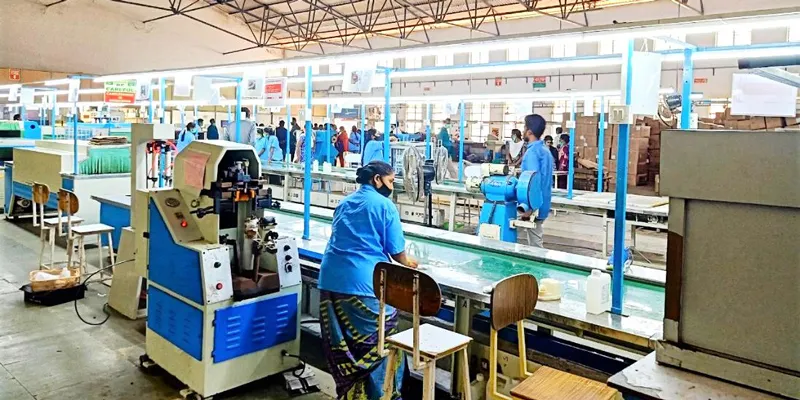
Fundamental Analysis of Hindustan Foods: FMCG’s Silent Giant, 50% PAT Growth & What FY27 Rerating Could Look Like
Business Model: The “Silent Giant” of FMCG
Hindustan Foods does not own brands; it owns the supply chain. Its moat lies in its “plug-and-play” infrastructure that allows FMCG brands to scale without building their own factories.
A. Diverse Operating Segments (2026)
- Home & Personal Care: The core segment, contributing the largest share of revenue. In early 2026, the company authorized a new ₹50 Crore project in this space to meet surging demand for premium skincare products.
- Foods & Beverages: Includes high-growth categories like health supplements and breakfast cereals.
- OTC Pharma & Health: A major growth trigger in 2026. Following the acquisition of the Aurangabad facility from Ultra Beauty Care in March 2026, the company is aggressively expanding into over-the-counter pharmaceutical manufacturing.
- Shoes & Leather: A niche but high-margin segment that has seen a recovery in export demand following new international trade deals in early 2026.
B. The “Capex” Flywheel
The company’s fundamental strength is its aggressive reinvestment. In FY26 alone, it spent over ₹750 Crore on Capex—representing more than 60% of its opening gross block. This ensures that the company remains technologically superior to smaller, unorganized contract manufacturers.
Fundamental Analysis of Hindustan Foods: Financial Performance: FY26 Snapshot
The Q3 FY26 results (announced in February 2026) and the early Q4 indicators show a company hitting record-high profitability.
A. Key Financial Snapshot (May 2026)
| Metric | Value (As of May 5, 2026) | Trend |
| Current Market Price (CMP) | ₹492 – ₹504 | Attractively Valued |
| Market Capitalization | ~₹6,023 Crore | Small-Cap High Growth |
| P/E Ratio (Trailing) | ~43.9x | Below 3yr Avg (78x) |
| Debt-to-Equity Ratio | 0.77x | Healthy for Capex Cycle |
| ROE (%) | ~14.0% – 14.8% | Stable |
B. FY26 Estimated Performance
- Revenue: Trailing 12-month (TTM) revenue crossed ₹3,900 Crore, a steady 15% YoY increase.
- EBITDA: Hit a record quarterly high of ₹93 Crore in Q3 FY26.
- Net Profit (PAT): Estimated to end FY26 in the ₹140–₹145 Crore range.
Fundamental Strengths: The HNDFDS “Moat”
1. Sticky Client Relationships
Hindustan Foods signs long-term “Take-or-Pay” contracts with its clients. This provides a guaranteed revenue floor, making its cash flows far more predictable than a typical branded FMCG company.
2. High Execution Speed
In 2026, the company is recognized for its ability to complete greenfield and brownfield projects without cost overruns. This reputation has allowed it to secure a diverse pipeline of projects across multiple categories simultaneously.
3. Deleveraged Growth
Despite massive spending, the Net Debt to Equity remains at 0.77x. The company has mastered the balance of using internal accruals and moderate debt to fund its ₹750 Crore+ annual expansion plans.
Fundamental Analysis of Hindustan Foods: Key Growth Triggers for FY27
A. Massive PAT Guidance
Management has raised its FY27 PAT guidance to ₹200–220 Crore. This represents a staggering 40-50% growth over FY26 estimates, primarily driven by new projects ramping up and the higher margins from the OTC pharma segment.
B. International Export Opportunity
With the dedicated export focus on shoes and OTC pharma, the company is targeting the US and European markets. Any stabilization in global trade after the April 2026 tariff shocks will be a significant tailwind for this segment.
Also read about Fundamental Analysis of Titan Company
Risk Factors and Bear Case
- Client Concentration: While it has many clients, a significant portion of revenue still comes from a handful of large MNCs. Any change in their sourcing strategy could impact Hindustan Foods.
- Labor Code Implementation: In late 2025/early 2026, the company had to make a one-time provision for the new labor code, which slightly impacted Q3 profits. Ongoing compliance costs in a 5,600+ employee organization remain a monitorable.
- Interest Rate Sensitivity: With a debt-equity of 0.77x, any prolonged high-interest-rate environment in late 2026 could slightly pinch net margins.
Fundamental Analysis of Hindustan Foods: Shareholding Pattern (March 2026)
- Promoters: ~61.3% (Strong control, slight decrease over 3 years to fund expansion).
- FIIs & DIIs: ~15-20% (Increasing institutional interest as the company moves toward the ₹10,000 Cr Market Cap milestone).
- Retail: ~18-20%.
Frequently Asked Questions (FAQ)
Is Hindustan Foods a debt-free company?
No, it has a Debt-to-Equity ratio of 0.77x. However, this is considered healthy for a contract manufacturer that is currently in a massive expansion phase (₹750 Cr Capex).
How does Hindustan Foods compare to HUL?
HUL is a Brand Owner (B2C), while Hindustan Foods is a Manufacturer (B2B). HUL takes the risk of marketing and competition; Hindustan Foods takes the risk of manufacturing execution. Interestingly, HUL is one of Hindustan Foods’ largest clients.
What is the target price for Hindustan Foods in 2026?
While target prices vary, the strong FY27 PAT guidance of ₹200-220 Crore suggests an intrinsic value significantly higher than the current ₹490-₹500 levels, with many analysts eyeing a ₹650–₹700 target by mid-2027.
Conclusion: The May 2026 Verdict
Hindustan Foods is a “Growth-at-Reasonable-Price” (GARP) play in the May 2026 market. While its P/E of 44x might seem high to a value investor, it is nearly 40% lower than its 3-year average, despite the company being at its most profitable stage. With FY27 PAT expected to grow by 50%, the stock is currently in a “buy-on-dips” zone. For investors, the key is the ₹200 Crore profit milestone in FY27; if the company hits this, a significant valuation rerating is inevitable.
Disclaimer: The views expressed are for informational purposes only and do not constitute financial advice. Investing in stocks and IPOs involves significant risk.
forgeup.in is not liable for any financial losses. Always consult a certified investment advisor before making any decisions.