
Fundamental Analysis of Hero MotoCorp: Hero MotoCorp Ltd is the world’s largest manufacturer of two-wheelers, maintaining a dominant grip on the Indian commuter segment (100cc–125cc). As of April, 2026, the company is at a strategic crossroads, moving away from being a “one-trick pony” focused on rural commuters to a diversified player in the Premium (440cc+) and Electric Vehicle (EV) markets.
In the current market, Hero MotoCorp is valued as a “Value & Dividend” play with a massive cash-rich balance sheet. While it faces stiff competition from Bajaj Auto and TVS Motor in the premium space, its recent aggressive gains in the EV sector through its Vida brand have surprised the street in FY26.
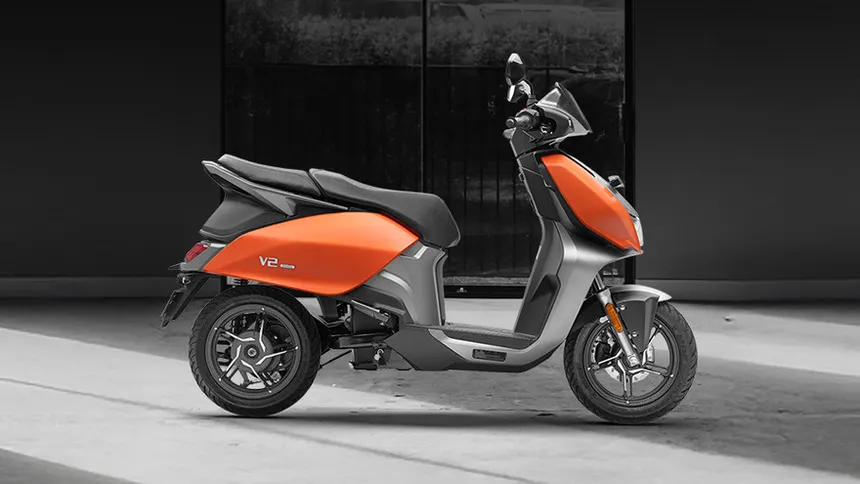
Fundamental Analysis of Hero MotoCorp: EV Growth, Dividend Strength & Premium Strategy Explained
Business Segments & Market Share
Hero’s business is traditionally rural-centric, but 2026 marks the year of its “Premium & Urban” transition.
A. Commuter Dominance (100cc – 125cc)
This remains the bread and butter, accounting for nearly 70-75% of volumes.
- The Splendor Factor: Following recent GST rationalizations for entry-level bikes, the Splendor brand saw a massive volume surge in early 2026, helping Hero regain market share in rural pockets.
- 125cc Recovery: The launch of the Xtreme 125R has been a fundamental game-changer, allowing Hero to finally compete effectively against the TVS Raider and Bajaj Pulsar 125.
B. The EV Surge (Vida Brand)
By the end of FY26 (March 2026), Hero MotoCorp’s Vida became the single largest market share gainer in the electric two-wheeler segment.
- Market Share: From a mere 2-3% at the start of FY26, Vida ended the year at 10.3% market share.
- Mass Market Strategy: The launch of the Vida Z series (priced sub-₹1 lakh) allowed Hero to cannibalize market share from Ola Electric, which saw its dominance fade in 2026.
Fundamental Analysis of Hero MotoCorp: Financial Performance – FY26 Analysis
The company’s Q3 FY26 (Oct–Dec 2025) and Q4 FY26 (Jan–Mar 2026) early indicators show a “high-volume, stable-margin” business.
A. Key Financial Metrics (Estimated April 2026)
| Metric | Value (Approx. April 2026) | Trend |
| Current Market Price (CMP) | ₹4,600 – ₹5,250 | Volatile/Range-bound |
| P/E Ratio (Trailing) | 18.2x – 21.1x | Very Attractive (Peer Avg: 30x) |
| Dividend Yield | 3.5% – 4.4% | Industry Best |
| EBITDA Margin | 14.8% | Expanding via Premiumization |
| Debt-to-Equity | 0.00 | Net Debt Free |
B. Recent Quarterly Context (Q3 FY26)
- Revenue: ₹12,487 Crore (Up 21.7% YoY).
- Net Profit (PAT): ₹1,275 Crore (Up 15% YoY).
- Interim Dividend: The company declared a massive ₹110 per share dividend in February 2026, reinforcing its status as a “Dividend Aristocrat.”
Fundamental Strengths: The Hero “Moat”
1. Unrivaled Distribution Network
Hero operates over 10,000+ touchpoints. This network is now being used to service Vida EVs in rural towns where startups cannot reach. In 2026, this infrastructure is Hero’s biggest weapon against “EV-only” competitors.
2. The Premium Partnership (Harley-Davidson)
The Harley-Davidson X440, manufactured by Hero, has been a massive fundamental “re-rating” trigger. It has allowed Hero to enter the ₹2.5 lakh+ category, where profit margins are 3x higher than entry-level bikes.
3. “Dividend Hero”
With a forward dividend yield of nearly 4.4% in April 2026, the stock provides a significant safety floor for investors. For a retail investor, this yield is comparable to a savings bank account return, but with the added potential for capital appreciation.
Fundamental Analysis of Hero MotoCorp: Key Risks & Headwinds for 2027
- Commodity Inflation: In April 2026, raw material prices (steel and aluminum) started rising again. Hero implemented two price hikes in Q4 FY26 to protect margins, but persistent inflation could hurt rural demand.
- The “US Tariff” Sentiment: On April 2, 2026, the US announced a 26% reciprocal tariff on certain Indian goods. While Hero’s direct exports to the US are small, the resulting FII (Foreign Institutional Investor) outflow from Indian large-caps has kept the stock price under pressure.
- Premium Competition: Bajaj’s collaboration with Triumph and TVS’s tie-up with BMW are fierce competitors in the high-margin segment where Hero is still a “newcomer.”
Shareholding Pattern (March 2026)
Institutional confidence remains exceptionally high as Hero transitions into the EV era.
- Promoters: 34.73% (Stable; Munjal family).
- Institutional Holding (FII + DII):55.92%.
- FIIs: ~29% (Foreign investors are attracted to the dividend and EV turnaround).
- DIIs: ~26% (Local mutual funds are using Hero as a “Value” play).
- Public/Retail: 9.35%.
Also read about India’s Smartest Way to Invest in Gold in 2026
Fundamental Analysis of Hero MotoCorp: Strategic Outlook for FY27 (2026-27)
Management has guided for a “Year of Execution” in FY27:
- Ather Integration: Hero’s increased stake in Ather Energy (over 40%) is expected to yield technological synergies in the high-performance EV scooter segment.
- Global Expansion: Hero is relaunching in Colombia and Africa with a revised export strategy to counter the domestic slow-down in certain pockets.
- The “Premia” Initiative: Expanding its “Hero 2.0” and “Premia” stores to provide a luxury buying experience, moving away from its “cheap bike” image.
Frequently Asked Questions(FAQ)
Is Hero MotoCorp better than Bajaj Auto in 2026?
Bajaj Auto has a stronger Export and 3-Wheeler footprint. However, Hero MotoCorp is currently the Value Pick because it is trading at a much lower valuation and offers a significantly higher dividend yield (4% vs Bajaj’s 2%).
What is the “Vida” brand’s target for 2027?
Management aims to achieve a 15% market share in the electric two-wheeler segment by March 2027, up from the current 10.3%, by expanding the “Z” mass-market series.
Does Hero MotoCorp have any debt?
No. Hero MotoCorp remains a Net Debt Free company with a massive cash reserve, which it is currently using to fund its EV expansion and high-margin product launches.
Conclusion
Hero MotoCorp is no longer the “stagnant” giant it was in 2022. Fundamentally, it has successfully used its Splendor-generated cash to buy its way into the EV market (Vida) and the Premium market (Harley-Davidson X440). In April 2026, with a P/E of ~19x (significantly cheaper than Bajaj or Eicher), it offers a “Safety Margin” that few other auto stocks can match. For a long-term investor, Hero is a core portfolio stock that offers a unique combination of high dividends and the “EV-transformation” upside.
Disclaimer: The views expressed are for informational purposes only and do not constitute financial advice. Investing in stocks and IPOs involves significant risk.
forgeup.in is not liable for any financial losses. Always consult a certified investment advisor before making any decisions.