
The Indian automotive sector is witnessing a “Power Pivot” that is no longer speculative—it is structural. While the broader Nifty 50 is wrestling with geopolitical friction and a ₹931-point Sensex dip, the Electric Vehicle (EV) Charging Infrastructure segment is radiating a high-growth “Alpha Vibe.” With the PM E-DRIVE Scheme now in full implementation, the government has accelerated the rollout of 88,500 public charging stations, effectively treating “Charge Points” as the new “National Highways.”
EV Charging Infrastructure Stocks: Complete 2026 Guide
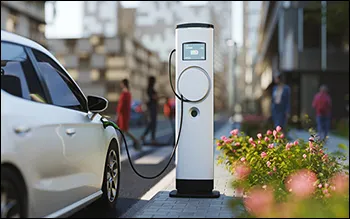
For the market participants, the 2026 narrative is clear: as Brent Crude bounces back to $97 per barrel, the energy security provided by a localized electric grid is the only hedge against global oil volatility. In a $5.5 trillion economy, the company that owns the “Socket” owns the customer.
The 2026 Infrastructure Matrix: Hardware vs. Network
The investment landscape is currently split into two distinct operational “Vibes.” Understanding this distinction is critical to ensuring your portfolio doesn’t “skip” the actual profit centers.
- The Network Aggregators (CaaS): These are the “Gas Stations of the Future.” Companies like Tata Power and Adani Total Gas are building massive networks. Tata Power, with over 10,000 public points, is leveraging its “EZ Charge” ecosystem to capture 60% of the urban charging volume.
- The Hardware Engineers: These firms build the actual “Pumps.” Exicom Tele-Systems and Servotech Power Systems are the primary beneficiaries of the “Make in India” mandate. As the Rupee sits at 92.71, these localized manufacturers are gaining a massive cost advantage over imported Chinese chargers.
Why is “Vibe Coding” Essential for Grid Stability?
By April 2026, the sheer volume of EVs has created a “Grid Load” challenge. To solve this, Indian tech-infrastructure firms are utilizing Agentic AI to manage the “Electricity Vibe.”
- Predictive Load Management: A grid operator in Mumbai now uses AI agents to “vibe check” the local transformer. The agent might prompt: “Shift 30% of the non-urgent charging load in Bandra to the 2:00 AM window to prevent a thermal spike, offering a 12% ‘Midnight Discount’ to users.”
- The Valuation Impact: Companies that integrate this “Smart Grid” software are being valued at 25x Forward Earnings, compared to just 12x for pure hardware players. This digital layer is the “Hidden Asset” in the Book Value of firms like ABB India and Siemens.
The 2026 Charging Leaderboard (April 9 Status)
| Company | Core Moat | 2026 Strategy | Current P/E |
| Tata Power | 550+ City Presence | Integrated “EZ” Ecosystem | 38.4 |
| Exicom | 60% DC Fast Charger Share | B2B Fleet Dominance | 44.2 |
| Servotech | Solar-EV Integration | Tier-2/3 Expansion | 52.1 |
| ABB India | Heavy-Duty Bus Charging | Industrial Scale | 68.5 |
Is “Battery Swapping” the Silent Competitor?
A “Deep-Dive” into the 2026 transport landscape reveals a divergence in user behavior.
- The 2W/3W Vibe: For delivery fleets (Zomato/Blinkit), Battery Swapping (led by Sun Mobility) is winning. It takes 2 minutes vs. 20 minutes of charging.
- The 4W/SUV Vibe: For the 100,000 daily commuters, DC Fast Charging is the dominant preference. With Nexon EV and Mahindra XUV400 now offering 15-minute “Top-ups,” the “Charging Station” remains the primary infrastructure bet for high-ticket investors.
The “Forex Friction”: Rupee at 92.71 and the Supply Chain
In early 2026, the weak Rupee is creating a “Margin Headache” for companies that haven’t localized their semiconductor and power module sourcing.
- The Cost Trap: High-end DC fast chargers (120kW+) still rely on imported components. At a 92.71 exchange rate, the CAPEX for a charging hub has increased by 14% since last year.
- The Winner’s Vibe: Companies like Exicom that have achieved 70% localization are seeing their margins expand while competitors struggle. For the forgeup.in community, “Localization %” is now a more important metric than “Revenue Growth.”
5-Point Checklist for the EV Infrastructure Investor
- Utilization Ratio: A charger is only profitable if it’s used 25% of the day. Look for companies with “B2B Tie-ups” with Uber or BluSmart.
- Interoperability: Does the charger work with all apps? In 2026, “Open-Roaming” protocols are mandatory. Companies that block other apps are losing Market Value.
- Solar Integration: With energy costs rising, “Solar+Storage” hubs are the most resilient. Servotech is currently leading this specific “Green Vibe.”
- AMC Revenue: Check the “Annual Maintenance Contract” share of revenue. This is high-margin, “Sticky” income that provides a safety net during market dips.
- Grid-to-Vehicle (V2G) Readiness: Can the chargers feed power back to the grid during peak hours? This is the “Trillion Dollar” feature of late 2026.
Also read about The “Vibe Coding” Revolution
Final Thoughts: The Electric Dividend
The Indian EV Charging sector in 2026 is at the heart of the “Clean Energy” and “Digital India” convergence. While the Sensex 931-point drop today creates short-term noise, the structural mandate to electrify the nation is “Recession-Proof.”
For the community, the strategy is to follow the “Network Effects.” Own the companies that are building the digital and physical “Toll Booths” of the 21st century.
FAQ: 4 Critical Questions for EV Charging Infrastructure Stocks
1. Why is Tata Power falling today despite the EV boom?
The 0.93% Nifty dip and FII selling of ₹2,811 crore have dragged down all heavyweights. Additionally, higher Natural Gas prices (due to the $97 oil spike) are temporarily hurting Tata Power’s non-EV segments, creating a “Value Entry” for pure EV believers.
2. How does the “T+3 Listing” rule affect EV startups?
It has accelerated the “Vibe Shift” in the private equity space. Charging startups can now list and provide liquidity to early investors in 72 hours, allowing for faster capital rotation into new technologies like “Wireless Charging.”
3. What is the impact of the PropShare REIT on EV stocks?
Indirectly, it’s a positive. As REITs like PropShare professionalize commercial real estate, “EV Charging Mandates” are being written into the building bylaws of these ₹1,000-crore assets, guaranteeing “Premium Footfall” for charging providers.
4. Can I find “Dividends” in the EV Charging space?
Currently, most firms (Exicom, Servotech) are in “Hyper-Growth” and reinvesting every Rupee. Only Tata Power and ABB offer a “Dividend Vibe,” as they have mature legacy businesses to fund their EV expansion.
Disclaimer: The views expressed are for informational purposes only and do not constitute financial advice. Investing in stocks and IPOs involves significant risk.
forgeup.in is not liable for any financial losses. Always consult a certified investment advisor before making any decisions.