
The fifth season of Shark Tank India recently witnessed a high-voltage “Diamond Match-Off” that left the startup ecosystem buzzing. For the first time in the show’s history, two direct competitors in the Lab-Grown Diamond (LGD) space—Emori and True Diamond—pitched back-to-back.
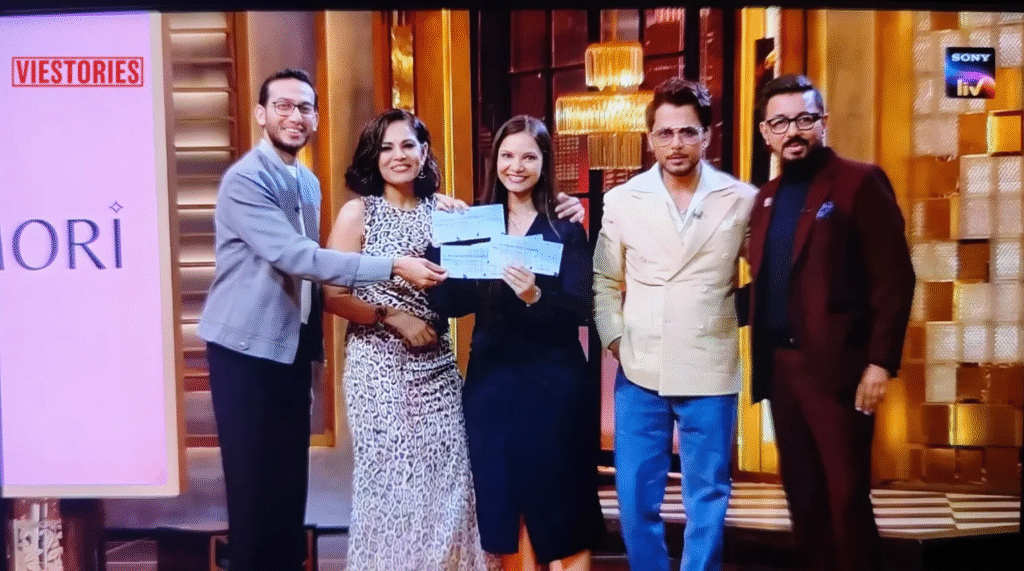
While one brand walked away with a multi-crore cheque, the other executed a masterclass in post-show marketing that “won the internet.”
For investors and consumers alike, this face-off highlights the shifting dynamics of India’s ₹2,500 crore lab-grown diamond market.
The Pitch: Emori’s Tactical Win
Founded by Arushi Jain, Emori entered the tank with a clear, data-driven narrative. Targeting millennials and Gen Z with an “online-first” strategy, Emori’s pitch focused on capital efficiency and inventory management.
- The Numbers: Emori reported a lean inventory model with a 10x turnover rate and a 12% repeat customer rate.
- The Valuation: Initially seeking ₹75 lakh for 1% equity (₹75 Cr valuation), the brand eventually settled for a ₹3 crore investment for 6% equity at a ₹50 crore valuation.
- The Investors: A powerhouse quartet of Anupam Mittal, Amit Jain, Namita Thapar, and Ritesh Agarwal backed the brand.
The Pitch: True Diamond’s Content Play
True Diamond, led by Darayus Mehta and Parin Shah, presented a starkly different approach. Known for their viral social media presence and “unfiltered” brand voice, they sought ₹1.08 crore for 1% equity.
Despite their impressive reach and millions of organic views, the Sharks flagged concerns regarding brand clarity and a lack of focus on unit economics. Aman Gupta specifically criticized the product designs, leading to an exit without a deal.
Comparative Analysis: Emori vs. True Diamond
| Feature | Emori Diamond | True Diamond |
| Founders | Arushi Jain | Darayus Mehta & Parin Shah |
| Shark Tank Outcome | ₹3 Cr Deal (4 Sharks) | No Deal |
| Core Strength | Operational Efficiency & Inventory | Storytelling & Viral Content |
| Strategy | Multi-channel (Online + Retail) | Content-First / Digital Only |
| Target Audience | Millennials & Gen Z | Content-savvy Youth |
Turning Rejection into Reach: The “Spoof” Series
In a move that redefined post-Shark Tank behavior, True Diamond did not take the “no” personally. Instead, they collaborated with their “rival” Emori to create a three-part viral spoof series on Instagram.
This self-deprecating content, which mocked the awkwardness of the match-off, reached over 1 million views within days. It proved that in 2026, organic reach and cultural relevance can be just as valuable as venture capital.
Regulatory Context: SEBI and LGD Transparency
As per SEBI and Ministry of Commerce guidelines, lab-grown diamonds are physically and chemically identical to mined diamonds but must be clearly disclosed.
Both Emori and True Diamond adhere to these transparency standards, providing IGI/GIA certifications to ensure consumer trust.
For investors, the LGD sector remains a high-growth area due to its 70–80% lower price point compared to natural diamonds, making luxury accessible to a wider Indian middle class.
Why This Matters for Your Portfolio
If you are tracking the retail or luxury sector, the True Diamond vs. Emori saga offers two distinct lessons:
- Emori represents the strength of operational fundamentals—investors want to see high inventory turns and clear paths to profitability.
- True Diamond represents the power of community and brand equity—proving that a “no” from the Sharks can be converted into a “yes” from the market through creative storytelling.
Final Verdict
Emori won the funding, but True Diamond won the brand recall. For the Indian consumer, the competition between these two giants only means better designs, more transparent pricing, and a more vibrant lab-grown diamond ecosystem.