
As of Friday morning, April 10, 2026, the Indian equity market is witnessing a fundamental shift in “Consumer Vibe.” Meanwhile, while the Nifty 50 is still processing the volatility of $97 crude oil, the Organic Food and Wellness sector is steadily emerging as a high-margin ‘Alpha’ sanctuary. Driven by the National Mission on Natural Farming, which has now certified over 15 million hectares of land as organic, the sector is no longer a niche luxury—it is a mainstream staple of the $5.5 trillion economy.
Top Organic Food Stocks in India to Buy in 2026
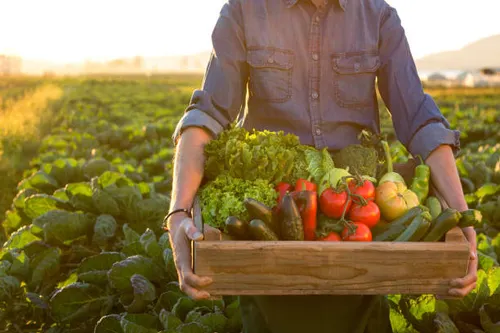
For the market participants, the 2026 investment thesis for organic stocks is built on “Premiumization.” As the Indian middle class prioritizes longevity and immunity, the Market Value of companies that can prove “Farm-to-Fork” traceability is seeing a significant re-rating.
The “Clean Label” Leaders: KRBL and LT Foods
In 2026, the battle for the “Organic Plate” is being fought in the staples category—specifically Rice and Pulses.
- LT Foods (Daawat): Currently a market darling, LT Foods has successfully transitioned from a rice miller to a “Global Consumer Specialty” firm. Its organic subsidiary, Nature Bio Foods, is now contributing 15% to its total revenue. As the Rupee sits at 92.71, LT Foods is benefiting from a “Forex Tailwind” as it exports its organic quinoa and basmati to health-conscious markets in Europe and the US.
- KRBL (India Gate): Trading near ₹412.50, KRBL is leveraging its massive “Aged Rice” inventory to launch organic brown and sprouted rice variants. Its strategy for 2026 focuses on “Direct-to-Consumer” (D2C) channels, cutting out distributors to preserve an EBITDA margin of 18-20%.
Why “Traceability” is the 2026 Valuation Multiplier
A “Deep-Dive” for the forgeup.in community: In the 2026 market, “Organic” is just a word unless it is backed by Blockchain Traceability.
- The Trust Vibe: Companies like Zydus Wellness (Sugarlite/Nivaar) are using QR codes on every pack that show the exact soil health and pesticide-free certification of the farm where the ingredients were grown.
- The Premium Factor: Consumers are willing to pay a 25-40% premium for verified organic products. This “Trust Dividend” is helping wellness stocks maintain high Return on Equity (ROE) even as inflation impacts traditional FMCG (Fast-Moving Consumer Goods) players.
How “Vibe Coding” is Managing Organic Yields
Organic farming has traditionally suffered from lower yields compared to chemical farming. In 2026, agri-tech firms are using Agentic AI to close this gap.
- Predictive Pest Vibe: For instance, an organic farm manager in Sikkim recently prompted the AI: ‘Analyze the humidity vibe in the ginger block and suggest a microbial spray schedule to prevent fungal growth without using synthetic fungicides.
- Outcome: This “Intent-based Farming” is increasing organic yields by 22%, making organic products more affordable for the mass market and boosting the Book Value of companies with integrated farming operations.
The 2026 Wellness & Organic Leaderboard
| Company | Core Focus | 2026 Market Vibe | 1-Year Return |
| LT Foods | Organic Staples & Rice | Strong Growth | +44.2% |
| Zydus Wellness | Health Food & Sweeteners | Defensive Value | +18.5% |
| KRBL Ltd | Premium Organic Rice | Consensus Buy | +21.0% |
| Hindustan Foods | Contract Mfg for Organic Brands | Scale Player | +30.8% |
Is the “Organic vs. Natural” Confusion Fading?
By April 2026, FSSAI’s “Jaivik Bharat” logo has become the universal symbol of authenticity.
- The Regulation Factor: Stringent “Zero Chemical” norms have weeded out the “Greenwashing” brands that plagued the market in 2023. This has consolidated the market share toward organized, listed players.
- The “Wellness” Crossover: We are seeing “Organic” expand into the snacking segment. Companies that provide organic millets and roasted seeds are seeing the fastest “Volume Growth” as India fights its lifestyle-disease crisis.
5-Point Checklist for the April 2026 Organic Stock Investor
- Check “Certification Depth”: Does the company have USDA, EU, and Jaivik Bharat certifications? Because having multiple labels protects the company from export bans.
- Analyze the “D2C Share”: Organic products have better margins – specifically when sold through the company’s own app or ‘Organic Specialty’ stores, rather than traditional kiranas.
- Monitor “Inventory Turns”: Organic products often have a shorter shelf life due to a lack of preservatives. High inventory turnover is a sign of a “Healthy Vibe.”
- Verify “Sourcing Security”: From an investment standpoint, does the company have long-term contracts with farmer cooperatives? Especially since in a $97 oil world, supply chain disruption is the biggest risk.
- Watch the “Millet Integration”: With the ongoing International Decade of Millets (2023-2032), companies with a strong organic millet portfolio are getting additional government tax sops.
Also read about Best Fertilizer Stocks in India 2026
Final Thoughts: Harvesting the Future
The Indian Organic Food sector in 2026 is the ultimate “Long-Life” investment. While the Sensex dived 931 points yesterday, the fundamental demand for “Food as Medicine” is recession-proof.
For the community, the strategy is to look for “Integrated Players”—those who control everything from the seed to the smartphone app. The $5.5 trillion economy is hungry for health, and the stocks feeding that demand are set for a multi-year bull run.
FAQ on Organic Food Stocks India
1. Why is LT Foods performing better than traditional FMCG giants in 2026?
Traditional FMCG firms are struggling with “Input Cost Inflation” due to high oil and chemical fertilizer prices. LT Foods, through its organic arm, is shielded from fertilizer spikes and benefits from a high-margin, affluent consumer base that is less “Price Sensitive.”
2. How does the weak Rupee (92.71) affect organic stocks?
It is a “Net Positive.” India is a massive exporter of organic cotton, herbs, and rice. A weak Rupee boosts the revenue of exporters like KRBL and LT Foods when they repatriate their overseas earnings.
3. Is “Zydus Wellness” a pure organic play?
No, it is a “Wellness Play.” While not 100% organic, its shift toward “Natural and Sugar-Free” aligns with the organic consumer’s Intrinsic Value. It offers a safer, more diversified “Vibe” for conservative investors.
4. What is the impact of the PropShare REIT on the food sector?
As REITs like PropShare professionalize malls and office parks, they are dedicating more space to “Premium Wellness Cafes” and organic grocers. This is providing high-quality “Physical Distribution” for the brands mentioned in this report.
Disclaimer: The views expressed are for informational purposes only and do not constitute financial advice. Investing in stocks and IPOs involves significant risk.
forgeup.in is not liable for any financial losses. Always consult a certified investment advisor before making any decisions.