
The Indian cement industry stands at a critical crossroads. With India’s market capitalization crossing $5.5 trillion, the demand for “Grey Gold” has never been higher. From the completion of the 2026 Smart City Phase II to the massive expansion of the high-speed rail corridors, the Market Value of the sector is tethered directly to the nation’s construction heartbeat.
However, today’s session is a masterclass in “Margin Pressure.” While demand is robust, the overnight surge in Brent Crude to $107 per barrel and the rising cost of Petcoke (a major fuel for kilns) have sent ripples through the sector’s profitability charts.
Indian Cement Stocks 2026: The Ultimate GDP Proxy Guide
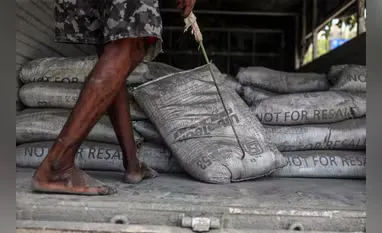
1. The Consolidation Wave: The “Big Three” Dominance
In early 2026, the cement sector is no longer a fragmented market. It has become an oligopoly where three giants control nearly 60% of the total installed capacity.
- UltraTech Cement: The undisputed leader. With a capacity exceeding 160 MTPA (Million Tonnes Per Annum), its Book Value has grown steadily as it absorbs smaller regional players in the South and East.
- The Adani Factor (Ambuja & ACC): The aggressive “Green Cement” push by the Adani Group has forced the entire industry to pivot toward sustainable manufacturing to maintain institutional Market Value.
- Shree Cement: Known as the “Cost Leader,” it continues to maintain the highest EBITDA per tonne in the industry due to its superior energy efficiency.
2. The Energy Crisis: $107 Oil and the Petcoke Trap
For a cement plant, power and fuel account for nearly 30% of total operating costs.
- The Problem: Most Indian cement kilns run on Petcoke or coal. Because Petcoke prices are internationally linked to Crude Oil, the jump to $107 per barrel acts as a direct hit to the bottom line.
- The Reaction: On the morning of April 2, 2026, we are seeing a 2-3% dip in cement stock prices as analysts “re-rate” the earnings potential for the June quarter.
- The 2026 Solution: Companies are racing toward Waste Heat Recovery Systems (WHRS). For example, Dalmia Bharat has increased its green energy share to 40%, effectively insulating its Intrinsic Value from the current oil shock.
3. Top Cement Stocks to Watch Today (April 2, 2026)
| Company | Regional Dominance | 2026 Catalyst | Current Sentiment |
| UltraTech | Pan-India | $1B acquisition of a major South-based competitor | Cautious (Oil impact) |
| Ambuja Cement | North & West | Synergy benefits with ACC and new logistics tech | Neutral |
| JK Cement | White Cement Leader | Diversification into the high-margin “Paints” sector | Positive (Niche growth) |
| The Ramco Cements | South India | Completion of the Kurnool plant expansion | Value Buy (Low P/B) |
How Does “Vibe Coding” Optimize a 2026 Cement Kiln?
It sounds futuristic, but “vibe coding” logic has entered the heavy industry. In 2026, cement plant managers use Agentic AI to manage the “vibe” or the thermal efficiency of their furnaces.
- Intent-Based Management: Instead of manually adjusting thousands of sensors, the manager prompts the system: “Maintain maximum clinker quality while reducing fuel consumption by 4% based on current Petcoke humidity.”
- The Result: AI agents execute the code in real-time to adjust the kiln’s rotation and airflow. This digital transformation is adding roughly ₹50 to ₹100 per tonne to the net profit, a factor that is often “Hidden Value” not yet visible in the Book Value.
Is “Market Value” Ignoring the “Real Estate Slowdown”?
While residential real estate in Tier-1 cities has seen a slight cooling in early 2026 due to higher home loan rates, the Market Value of cement stocks remains supported by Infrastructure Spending.
- Government Capex: The 2026-27 Union Budget has allocated record funds for National Highways and Urban Infra.
- The “Fly Ash” Advantage: Cement companies are now using more “Fly Ash” (a waste product from power plants) in their mix. This reduces the Face Value cost of raw materials and allows them to market “Eco-Friendly Cement” at a 10% premium price.
5-Point Checklist for Investing in Cement Stocks
- Check the “Capacity Utilization”: A company running at 90% capacity is more efficient than one running at 60%. High utilization leads to better “Operating Leverage.”
- Analyze Debt-to-Equity: Cement is a capital-intensive business. Ensure the company isn’t over-leveraged, especially with the 2026 interest rates being higher than in previous years.
- Freight Cost Analysis: Cement is a “bulky” commodity. Look for companies with plants located close to their markets to save on high diesel costs (driven by $107 oil).
- Monitor the P/B Ratio: In 2026, many PSU-adjacent cement firms trade at a Price-to-Book ratio below 1.5, offering a “Margin of Safety” compared to the expensive Nifty IT stocks.
- Watch the “Price Hikes”: Every month, dealers report price changes per bag (50kg). If companies cannot “pass on” the $107 oil cost to the consumer through price hikes, their stock prices will continue to bleed.
Also read about Best PSU Dividend Stocks India 2026
Final Thoughts: Building for the Long Term
The cement sector in 2026 is the ultimate “Cyclical Play.” While the “Trump Shock” and oil prices are creating short-term volatility, the long-term “India Growth Vibe” remains intact.
For the community, the strategy is clear: focus on the “Cost Leaders” who have the best AI-driven efficiency. When oil eventually cools, these companies will see a massive “Earnings Delta” that will drive their Market Value to new record highs.
FAQ on Indian Cement Stocks 2026
1. Why is the “Market Value” of cement stocks falling while demand is high?
It is a classic case of “Margin Contraction.” Even if sales volumes are high, the cost of producing that cement (fuel and transport) has risen faster than the selling price due to the $107 oil spike.
2. Does a Stock Split in a cement company like UltraTech change my dividend?
A split reduces the Face Value (e.g., from ₹10 to ₹2). Since dividends are declared as a percentage of the Face Value, your “dividend per share” will drop, but since you will own more shares, your “total dividend income” remains exactly the same.
3. What is “Green Cement” and does it help the stock price?
Green cement uses less clinker and more industrial waste. In 2026, ESG (Environmental, Social, and Governance) funds only invest in “Green” companies. Being green provides a “Valuation Premium” in the market.
4. How do I calculate the “P/B Ratio” for a cement stock?
Take the current Market Price and divide it by the Book Value per share (Assets minus Liabilities divided by total shares). In 2026, a P/B between 1.5 and 2.5 is considered “Fair Value” for a top-tier cement firm.
Disclaimer: The views expressed are for informational purposes only and do not constitute financial advice. Investing in stocks and IPOs involves significant risk.
forgeup.in is not liable for any financial losses. Always consult a certified investment advisor before making any decisions.