
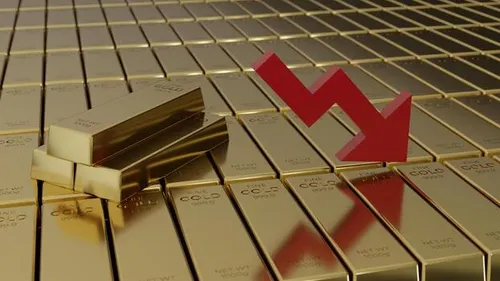
In a typical geopolitical crisis, gold is the “ultimate insurance policy.” However, the third week of March 2026 has defied decades of financial logic. As of March 20, 2026, despite the escalating military conflict between the US, Israel, and Iran and crude oil prices surging toward $120 per barrel, gold has plummeted by nearly 8% this week—its steepest weekly decline since the 2020 pandemic.
For investors, understanding this counterintuitive move is vital. The market is currently witnessing a rare scenario where “Monetary Reality” is more powerful than “Geopolitical Fear.” Here are the four primary reasons why gold is falling even as the world stays on edge.
Why Is Gold Falling Amid War and Rising Oil in 2026?
1. The “Inflation-Interest Rate” Trap
Traditionally, rising oil prices are good for gold because they cause inflation. However, in 2026, the market is viewing high oil prices as a signal for higher-for-longer interest rates.
- The Logic: If oil stays above $100, central banks (like the US Fed and RBI) cannot cut interest rates because inflation will remain high.
- The Impact: Gold is a non-yielding asset; it doesn’t pay interest. When interest rates on government bonds stay high (currently above 4% for US 10-year Treasuries), investors prefer the “guaranteed return” of bonds over the “storage cost” of gold.
2. The Dollar as the “Ultimate” Safe Haven
In times of extreme global liquidity stress, investors often bypass gold and head straight for the US Dollar.
- The 2026 Shift: As the Iran-US war disrupts the Strait of Hormuz, global trade is settling in USD. This has pushed the Dollar Index (DXY) to stay remarkably stable near the 100-point mark.
- The Price Pressure: Since gold is priced in dollars, a stronger dollar makes gold more expensive for foreign buyers (like those in India), dampening global demand and pushing prices down in the international market.
| Asset | Price Level (March 20, 2026) | Weekly Change | Key Driver |
| Spot Gold | ~$4,715 / oz | -7.8% | Hawkish Fed / Strong USD |
| Brent Crude | ~$114 / bbl | +45% (Since War Start) | Hormuz Supply Risk |
| MCX Gold (Apr) | ₹1,48,302 / 10g | -2.36% (Single Day) | Global Sell-off |
| US Dollar (DXY) | 99.17 | Stable / Strong | Flight to Liquidity |
3. Margin Calls and Liquidity Squeezes
When the stock market crashes—as seen with the Nifty 50 dropping 5% since the war began—large institutional investors often face “Margin Calls.”
- To cover losses in their equity and derivative portfolios, these institutions are forced to sell their most liquid and profitable assets.
- The “Profit Booking” Effect: Gold had a parabolic run in 2025, reaching nearly $5,300. In March 2026, many funds are liquidating their gold holdings to raise cash, creating massive downward pressure on the “Yellow Metal.”
4. Rebalancing After the 2025 “Gold Bubble”
Market analysts from J.P. Morgan and Goldman Sachs suggest that gold was fundamentally overvalued entering 2026. The metal’s 64% surge in 2025 had already “priced in” a significant amount of global uncertainty.
- Technical Breakdown: On March 19, gold broke below its 200-period Simple Moving Average (SMA). This triggered algorithmic selling across major global exchanges, accelerating the decline regardless of the news coming out of the Middle East.
Also read about BEML Mauritius Metro Order
What Should Investors Do?
According to experts from Tata Mutual Fund and IndusInd Securities, the current fall is a “short-term liquidity adjustment” rather than a loss of gold’s long-term value.
- Avoid Panic Selling: The long-term case for gold remains intact due to central bank diversification.
- Staggered Accumulation: If you are a long-term investor, the drop toward the ₹1.48 lakh level (MCX) or $4,600 (Comex) provides a potential entry point.
- Watch the Fed: The next Federal Open Market Committee (FOMC) meeting signals will be more important for gold than the war headlines. If the Fed hints at eventual rate cuts, gold will likely rebound instantly.
Disclaimer: The views expressed are for informational purposes only and do not constitute financial advice. Investing in stocks and IPOs involves significant risk.
forgeup.in is not liable for any financial losses. Always consult a certified investment advisor before making any decisions.