
Fundamental Analysis of Varun Beverages: Varun Beverages Limited (VBL) stands as one of the largest franchisees of PepsiCo globally (outside of the United States). The company produces, bottles, and distributes a wide portfolio of carbonated soft drinks (CSDs), non-carbonated beverages (NCBs), and packaged drinking water. Its ecosystem spans across India, parts of South Asia (Nepal, Sri Lanka), and an aggressively expanding footprint in sub-Saharan Africa (Morocco, Zambia, Zimbabwe, and South Africa).
In the stock market sessions of May, 2026, Varun Beverages is trading at approximately ₹536.70, stabilizing near its 52-week highs after a robust earnings presentation. Commanding a massive market capitalization of ~₹1.81 Lakh Crore, VBL is currently categorized by institutional desks as an elite, high-growth FMCG powerhouse.
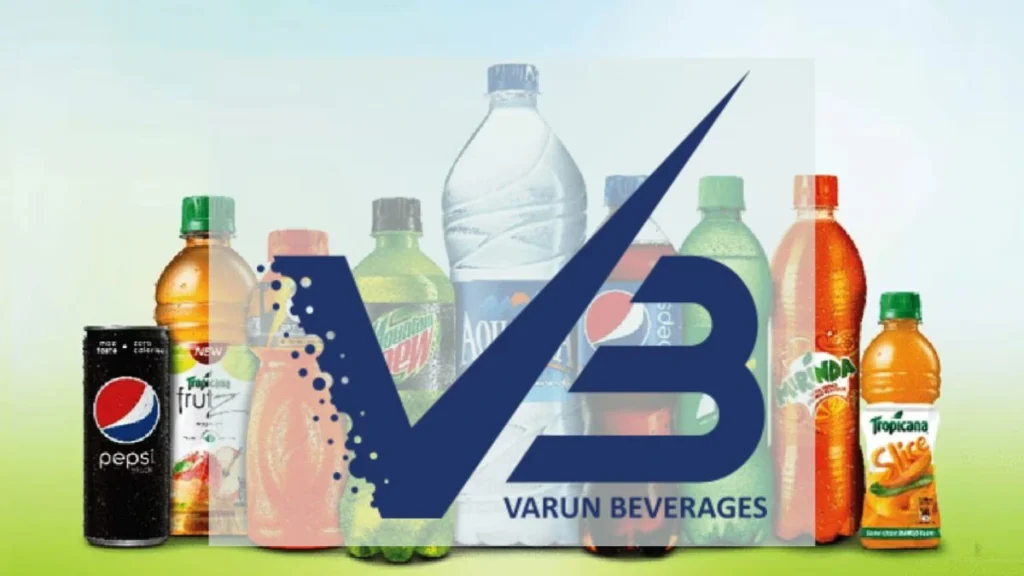
Fundamental Analysis of Varun Beverages — Q1 CY2026 Results: 20% PAT Growth, Africa Bet, and the P/E Risk Nobody Is Talking About
Latest Financial Performance: Q1 CY2026 Analysis
(Note: Varun Beverages follows a January-to-December Calendar Year fiscal cycle).
The Q1 CY2026 audited results (announced April 28, 2026) showcased exceptional structural execution, demonstrating that VBL can comfortably expand its capacity without dragging down baseline operational efficiency.
Key Financial Metrics (Consolidated)
| Metric | Q1 CY2026 (Actual) | Q1 CY2025 (Baseline) | Trend (YoY) | Commentary |
| Operational Revenue | ₹6,574.2 Crore | ₹5,566.9 Crore | ▲ 18.1% | Driven by heavy volume expansion. |
| Consolidated Sales Volume | 363.4 Million Cases | 312.4 Million Cases | ▲ 16.3% | Rapid consumer onboarding. |
| EBITDA | ₹1,528.9 Crore | ₹1,264.0 Crore | ▲ 21.0% | Strong operational leverage. |
| EBITDA Margin (%) | 23.3% | 22.7% | ▲ 55 bps | Driven by advanced material buying. |
| Net Profit (PAT) | ₹878.7 Crore | ₹731.4 Crore | ▲ 20.1% | Beating core consensus expectations. |
B. The Realization vs. Growth Pivot
- International Surges (+21.4%): Overseas expansion heavily outpaced domestic operations, proving that the corporate model is highly scalable inside African and South Asian corridors.
- India Volume Tighter Pricing (-1.5% realization): Domestic volumes grew at a robust 14.4%. However, net realizations per case inside India compressed by 1.5%. Management intentionally used this pricing strategy—upsizing packs and rolling out affordable access-price entry points—to onboard new rural consumers.
Fundamental Analysis of Varun Beverages: Core Business Moats and Structural Growth Drivers
A. Evolving Healthy Product Mix
A defining trend for VBL’s 2026 fundamental profile is its success in shifting the core product basket away from pure sugar-heavy carbonated sodas to suit modern consumer preferences. Low-sugar and no-sugar beverages accounted for approximately 63% of total sales volumes in Q1 CY2026. This rapid transition safeguards the firm from potential “sugar tax” compliance frameworks while sustaining strong volume additions.
B. The Africa Greenfield and Merger Footprint
VBL has evolved its African geography from a marginal asset into a secondary structural growth pillar:
- The Twizza Consummation: During the current quarter, VBL fully completed the 100% acquisition of Twizza (Pty) Limited in South Africa through its subsidiary, BevCo, at an adjusted enterprise value of ZAR 2,053 million. This instantly provides VBL with an optimized routes-to-market structure in Africa’s largest soft drinks market.
- Dairy Expansions: The group signed an agreement to acquire Crickley Dairy in South Africa, diversifying its FMCG perimeter further into institutional protein-based nutrition networks.
C. The Sting Multiplier Effect
The continued growth of the high-margin energy drink portfolio, Sting, remains an outstanding growth engine. It commands superior pricing power and higher margin buffers compared to packaged drinking water (18.9% of volume) or traditional carbonated items, working as a primary catalyst to lift consolidated EBITDA margins toward the upper 23.5% bands.
Financial Efficiency and Balance Sheet Safety
- Advanced Procurement Shield: VBL expanded its gross margins by 62 basis points to 55.2% during the quarter. This expansion was achieved by intentionally stocking key raw materials (PET chips and sugar derivatives) early, ahead of seasonal heatwave fluctuations, completely insulating its margins from localized inflation.
- The Capital Allocation Burden: Given its hyper-aggressive scaling nature, VBL commissioned four major greenfield manufacturing facilities last year (Buxar, Prayagraj, Damtal, and Meghalaya). As a result, quarterly depreciation overheads expanded by 30.9%, and finance borrowing costs climbed 18.0% to clear the Twizza transaction.
- Promoter Confidence: A highly positive sentiment trigger occurred during the March 2026 quarter, where promoters officially released all historical share pledges, indicating robust internal liquidity comfort.
- Dividend Yield: In alignment with corporate guidelines, the Board declared an interim dividend of ₹0.50 per equity share (25% of face value Re 2).
Fundamental Analysis of Varun Beverages: Key Risks and Headwinds: The Bear Case
- Absolute Lack of Pricing Power in India: The 1.5% reduction in domestic realisations indicates that VBL must continually rely on affordable unit economic strategies to protect its territory against regional players. If raw input margins spike, this lack of pricing elasticity could pressure margins.
- Sustained Capital Expenditures Drag: Operating an automated cold-chain network requires ongoing Capex injections. If interest rates remain globally sticky, financing heavy debt structures for overseas expansions could impact short-term free cash flow velocity.
- Macro FII Rotation Pressures: Global events, such as the 26% US reciprocal tariff on select Indian segments (April 2026), create temporary non-operational headwinds. While VBL’s direct business is localized, it remains vulnerable to foreign institutional investor (FII) capital outflows that can compress multi-system valuations across the broader FMCG space.
Also read about: Max Healthcare Shares See Big Fall Today Despite Q4 Profit Growth – What Gives?
Valuation Analysis: Premium Multiple for Premium Execution
| Parameter | Current Market Metric (May 22, 2026) | Valuation Context |
| Current Market Price (CMP) | ₹536.70 | Near 52-week highs |
| Trailing Price-to-Earnings (P/E) | 57.11x | Premium play, but under Sector P/E (102x) |
| Price-to-Book (P/B) Ratio | 8.48x | Reflects heavy capital asset base |
| Return on Equity (ROE) | ~20.15% | Excellent asset monetization efficiency |
| Broker Consensus Target | ₹560.00 – ₹630.00 | Healthy upside room |
Strategic Valuation Verdict: At a trailing P/E of ~57.1x, VBL cannot be classified as a cheap stock. However, compared to its historical peaks and a highly elevated sector average P/E of 102.4x, it trades at a constructive valuation relative to its growth. Institutional broker targets maintain a highly bullish outlook, projecting standard base targets between ₹560 and ₹630 through the later quarters of the calendar year.
Frequently Asked Questions
Why did Varun Beverages’ depreciation and finance costs rise significantly in Q1 CY2026?
Depreciation jumped 30.9% due to the commercial activation of four major production facilities (Buxar, Prayagraj, Damtal, and Meghalaya). Finance costs climbed 18.0% to directly fund the 100% strategic equity acquisition of Twizza in South Africa.
What are the structural details of the latest dividend announced?
The Board approved an interim dividend of ₹0.50 per equity share (25% on a face value of ₹2 each), resulting in a total corporate cash distribution of approximately ₹1,691 million. This follows the final dividend of ₹0.50 per share for FY2025 which was fully paid out in April 2026.
Why did VBL’s net realization per case decline by 1.5% in India?
The mild decline was a deliberate strategic intervention by management. VBL intentionally expanded its portfolio of upsized packs and rolled out selective low-cost entry price points across semi-urban and rural markets to aggressively onboard new consumer cohorts.
Conclusion
Fundamentally, Varun Beverages Limited in May 2026 represents a stellar “High-Beta Structural Compounder at Optimal Execution Velocity.”
The company’s core performance metrics are highly encouraging. VBL achieved a powerful 20.1% PAT growth despite absorbable interest costs from the Twizza South Africa buyout and depreciation charges from its newly commissioned domestic units.
Backed by a debt-cleared promoter pipeline, an outstanding 63% low-sugar product alignment, and a highly resilient 23.3% EBITDA margin, VBL remains perfectly positioned to ride India’s multi-year consumption and urban premiumization cycle. For growth-oriented institutional portfolios, building onto allocations within active support bands provides an excellent structural setup to capture long-term compounding as the African operations begin delivering full-year operational synergies.
Disclaimer: The views expressed are for informational purposes only and do not constitute financial advice. Investing in stocks and IPOs involves significant risk.
forgeup.in is not liable for any financial losses. Always consult a certified investment advisor before making any decisions.z