
Fundamental Analysis of DLF: DLF Ltd is India’s largest publicly listed real estate company. As of May, 2026, the company has achieved a historic milestone: it is now Net Debt Free at the residential business level. By successfully pivoting from an aggressive, high-leverage model to a disciplined, premium-focused powerhouse, DLF is currently the benchmark for “Quality Growth” in the Indian realty sector.
In the May 2026 market, DLF is navigating a unique technical setup. While the stock has seen some volatility in early 2026, it recently rallied 3.35% (May 4, 2026) to close near ₹611, outperforming the broader Nifty Realty index. Investors are now closely watching for the Q4 FY26 earnings release (expected mid-May), which is anticipated to confirm the bankability of its premium launch pipeline.
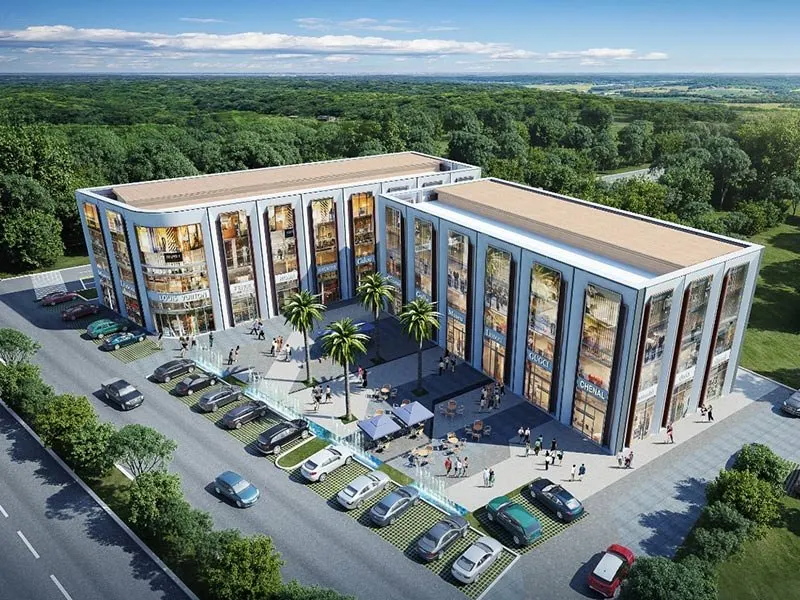
Fundamental Analysis of DLF: India’s Largest Realty Giant Goes Debt-Free — Is the ₹1,000 Target Realistic in 2026?
Fundamental Analysis of DLF: The Financial Turnaround: From Debt to Surplus
The defining feature of DLF’s fundamental analysis in 2026 is its “Fortress Balance Sheet.”
A. The Zero-Debt Milestone
- Net Cash Position: As of the quarter ended December 31, 2025, DLF reported a Net Cash Surplus exceeding ₹11,660 Crore.
- Credit Rating: Reflecting this financial strength, ICRA upgraded DLF’s credit rating to AA+/Stable in January 2026. This lower cost of capital provides DLF with a significant competitive advantage over mid-tier developers who are still struggling with high interest rates.
B. Record Collections
- Cash Flow Velocity: The company reported record-high quarterly collections of ~₹5,100 Crore in Q3 FY26.
- Operating Surplus: Cumulative net collections for 9M FY26 reached ₹10,216 Crore, a 21% YoY growth, driven by the timely delivery of its super-luxury projects like The Arbour and Privana.
Business Segments: Two Engines of Growth
DLF operates a dual-model system: Development (Residential) for high-velocity cash and Annuity (Commercial) for stable, recurring income.
A. Residential (The Development Business)
- Premium Shift: DLF has intentionally slowed down “mass-market” projects to focus on the Super-Luxury segment (properties priced ₹10 Cr+).
- The Dahlias Factor: Its marquee project, The Dahlias, was briefly paused for a redesign in late 2025 but resumed sales in early 2026 with a massive GDV (Gross Development Value) potential.
- Pre-Sales Guidance: Management is confident in achieving its ₹20,000 Crore pre-sales guidance for FY26, despite a temporary lull in new launches during the December quarter.
B. Commercial (DCCDL – Joint Venture with GIC)
- Rental Growth: Rental income from DLF Cyber City Developers Ltd (DCCDL) rose 18.4% YoY to reach ₹1,412 Crore per quarter in early 2026.
- Occupancy: Office occupancy remains robust at 94%, while retail/mall occupancy is near-perfect at 97%.
- Retail Expansion: DLF is on track to double its retail footprint by FY28 with new malls in Midtown (Delhi), Summit Plaza (Gurgaon), and Goa.
Fundamental Analysis of DLF: Financial Snapshot – May 2026 Perspective
| Metric | Value (As of May 7, 2026) | Trend |
| Current Market Price (CMP) | ₹609.60 – ₹611.25 | Consolidating |
| Market Capitalization | ~₹1.53 Lakh Crore | Mega-Cap Leader |
| Trailing P/E Ratio | ~31.9x | Fair for Premium Segment |
| Net Debt (Residential) | ZERO / Net Cash Surplus | Historic Achievement |
| Dividend Yield | ~0.98% | Consistent Payout |
| Target Price (Avg Analyst) | ₹900 – ₹1,000 | Bullish Outlook |
Fundamental Moats and Strengths
- Massive Low-Cost Land Bank: DLF owns thousands of acres in Gurgaon and the Delhi-NCR region, acquired decades ago at fractional costs. This allows them to maintain EBITDA margins of 30%+, significantly higher than competitors who must buy land at current market rates.
- Brand Equity: In the luxury segment, “trust” is the primary currency. DLF’s ability to sell out ₹5,000 Cr+ projects within 72 hours of launch (as seen with The Arbour) is a testament to its unmatched brand pull.
- Institutional Backing: The company has transitioned from being promoter-dependent to an institutional favorite, with heavy holdings from GIC, Invesco, and Vanguard.
Also read about Fundamental Analysis of Infosys
Fundamental Analysis of DLF: Risks and Headwinds – The 2026 Context
- Launch Delays: The Q3 FY26 pre-sales dip (down 97% YoY) was a reminder of “Execution Risk.” While temporary, any further regulatory or redesign-related delays in The Dahlias or Privana could impact FY27 cash flows.
- Concentration Risk: DLF is heavily reliant on the Gurgaon (NCR) market. Any regional regulatory change or infrastructure bottleneck in Gurgaon directly impacts 70% of its NAV (Net Asset Value).
- Interest Rate Sensitivity: While DLF is debt-free, its customers are not. If mortgage rates remain high through late 2026, the velocity of luxury home sales could slow down.
Frequently Asked Questions(FAQ)
Is DLF really debt-free now?
Yes, at the residential (Development) level, DLF achieved a Zero Gross Debt status in early 2026. The commercial arm (DCCDL) still carries debt, but it is ring-fenced and serviced entirely by stable rental cash flows.
What is the major catalyst for DLF in FY27?
The launch of Arbour Phase II and the next phases of West Park (Mumbai) and Panchkula are expected to be the major revenue drivers for the upcoming fiscal year.
Why did DLF sales fall in late 2025?
Pre-sales fell significantly because the company had no major new launches during that period and had temporarily paused sales for its luxury project The Dahlias for a redesign. Sales activity resumed strongly in Q4 FY26.
Conclusion
Is DLF still a “Buy” in May 2026? Fundamentally, the company has never been stronger. It has effectively decoupled itself from the “debt trap” that plagued it for a decade. Trading at a P/E of ~32x, the stock is not “cheap,” but it is arguably “fair” given its Net Cash status and its ₹6,400 Crore exit rental income target.
With 8 out of 10 analysts predicting a target price of ₹1,000 within the next 12 months, DLF remains the top pick for those looking to ride the Indian real estate super-cycle. The primary trigger for the next leg up will be the Q4 FY26 sales bookings data, which will prove if the premium demand remains insatiable.
Disclaimer: The views expressed are for informational purposes only and do not constitute financial advice. Investing in stocks and IPOs involves significant risk.
forgeup.in is not liable for any financial losses. Always consult a certified investment advisor before making any decisions.