
NEW DELHI – REC Limited, the Maharatna public sector power financier, reported a stable yet muted third-quarter (Q3FY26) performance on Thursday, January 29, 2026. While the company maintained its streak of rewarding shareholders with a third interim dividend, its bottom line faced a “plateau” effect, with net profit remaining virtually flat year-on-year (YoY) and witnessing a sharp sequential decline.
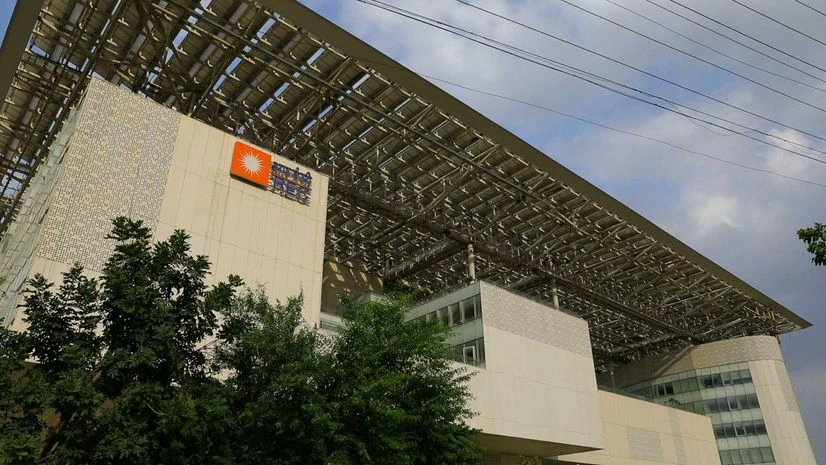
The stock reacted with a “sell-on-news” sentiment, trading down over 2.5% on Friday morning as the market balanced a record nine-month performance against immediate margin pressures.
The Q3 Earnings Snapshot: Why Profits Hit a Plateau
For the quarter ended December 31, 2025, REC’s standalone financials reflected a steady core business but rising operational hurdles:
- Net Profit: Stood at ₹4,043.08 crore, representing a marginal 0.35% increase from ₹4,029.09 crore in the same period last year.
- Sequential Slump: On a quarter-on-quarter (QoQ) basis, profit fell by 8.6% from ₹4,425.86 crore in Q2, indicating a cooling off in quarterly momentum.
- Total Income: Rose 5.5% YoY to ₹14,952.50 crore, driven by a growing loan book that now stands at ₹5.82 lakh crore.
- The Expense Spike: Total expenses rose 8.5% YoY to ₹9,836.10 crore, primarily due to higher borrowing costs and operational overheads, which successfully “ate up” the modest gains in interest income.
How Asset Quality Emerged as the Star Performer
While the profit numbers were unexciting, REC’s balance sheet health reached a multi-year high. This “under-the-hood” improvement is what long-term investors are currently banking on:
- NPA Meltdown: The Gross NPA ratio plummeted to 0.88% (compared to 1.95% in Dec 2024), while the Net NPA ratio reached a negligible 0.20%.
- Capital Strength: The Capital Adequacy Ratio (CRAR) remains robust at 24.26%, providing the company with a massive buffer to fund the government’s ambitious renewable energy targets through 2030.
- Provisioning: Stage-3 (NPA) provisioning coverage improved to 76.96%, up from 71.73% in March 2025.
The Shareholder Reward: ₹4.60 Interim Dividend
In a continued commitment to its status as a “Dividend Aristocrat” in the PSU space, the board approved a third interim dividend of 46% (₹4.60 per equity share).
- Total Dividend FY26: With this payout, REC has declared a total of ₹13.80 per share so far for the current fiscal year.
- Record Date: Friday, February 6, 2026.
- Payment Date: On or before February 27, 2026.
Market Verdict: Why the Stock is Under Pressure
Despite a record nine-month PAT (Profit After Tax) of ₹12,920 crore, the stock slipped below the ₹370 mark on Friday. Analysts suggest the market is concerned about Net Interest Margin (NIM) compression, which contracted to 29.14% from 30.30% in the previous quarter.
“REC is no longer a ‘growth at all costs’ story; it’s a stability and yield story,” noted a PSU sector analyst. “The flat profit growth suggests that the easy gains from interest rate spreads are narrowing, and the company must now rely on loan book volume to drive future earnings.”
What Retailers Should Watch For
- Renewable Shift: REC’s transition toward financing solar and wind projects (currently 14% of the book) is the primary long-term trigger.
- Cost of Funds: As global rates remain volatile, REC’s ability to borrow cheaply in international markets will determine its future margins.
- Support Levels: Technical analysts see strong support at ₹330-₹335. A sustained hold above this level could lead to a recovery toward its 52-week high of ₹460.