
Trent Ltd., the Tata Group’s retail arm, saw its share price plunge over 11% today, July 07, 2026, despite reporting a healthy 19% year-on-year revenue growth for the first quarter of FY27. This sharp decline has left many retail investors wondering why seemingly good news led to such a significant market reaction.
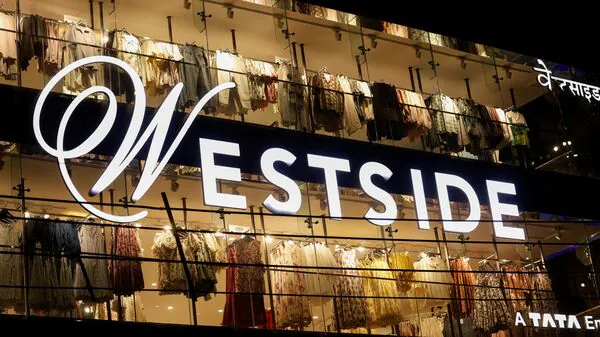
Quick Highlights: What Happened on July 07, 2026
- Share Price Drop: Trent shares fell over 11% on the NSE today.
- Q1 FY27 Revenue Growth: The company reported a 19% year-on-year increase in standalone revenue to ₹5,666 crore for Q1 FY27.
- Market Expectations Missed: This 19% growth was below Street estimates, which anticipated a 22-23% growth rate.
- Store Expansion: Trent added 20 new stores, including 19 Zudio outlets, taking its total store count to 1,312 as of June 30, 2026.
- Store Productivity Concerns: Brokerages highlighted a decline in revenue per square foot, indicating potential pressure on store efficiency.
Key Market Data — July 07, 2026
| Metric | Value (as of July 07, 2026) | Change |
|---|---|---|
| Trent | Rs 2,967.50 | Down 11.24% |
| 52-Week High | Rs 3,783 | – |
| 52-Week Low | Rs 2,184 | – |
| Market Cap | Rs 1,58,183.36 Cr | – |
| Volume | Significant shares traded | – |
Why It Happened: The Real Story Behind July 07, 2026’s Move
Trent’s shares saw a significant correction today because the company’s Q1 FY27 business update, while showing growth, fell short of the high expectations built into its stock price. Investors had anticipated a faster pace of expansion.
1. Growth Below Elevated Expectations?
Trent reported standalone revenue of ₹5,666 crore for Q1 FY27, marking a 19% year-on-year growth. However, this figure was below the 22-23% growth that market analysts had projected. This gap between reported growth and market expectations triggered the sharp selling pressure. For example, the stock had rallied 23% in the past month, with investors betting on an acceleration beyond the 20% YoY pace seen in Q4 FY26.
2. Concerns Over Store Productivity and Cannibalisation?
Despite adding 20 new stores in the quarter, including 19 Zudio outlets, some brokerages pointed to a decline in revenue per square foot. Citi, for instance, noted a 12.2% year-on-year drop in revenue per square foot, suggesting potential issues with new store ramp-ups or existing store sales being affected by nearby new openings. This indicates that while the company is expanding its footprint, the efficiency of its individual stores might be under pressure.
3. Institutional Activity and Broader Market Sentiment?
The market’s reaction also reflects a broader sentiment where high-growth stocks are closely scrutinised for any signs of deceleration. Data from March 2026 quarter showed that FIIs/FPIs slightly decreased their holdings in Trent from 15.62% to 15.59%, and Mutual Funds also reduced their stake from 14.19% to 13.92%. This suggests a cautious approach by institutional investors, which can amplify selling pressure when growth figures disappoint.
The Broader Picture: What This Means for Indian Markets
The sharp fall in Trent’s share price highlights how sensitive the market is to growth expectations, especially for companies that have seen significant rallies. The Indian retail sector is generally optimistic for 2026, with projections of continued double-digit growth, driven by a burgeoning middle class and expansion into Tier II and Tier III cities. However, competition is intensifying, and operational efficiency is becoming crucial for retailers.
This event serves as a reminder that even strong revenue growth might not be enough if it doesn’t meet the elevated benchmarks set by the market. Investors are increasingly looking beyond just top-line growth to metrics like store productivity and like-for-like sales growth, especially in a competitive environment.
What the Data Shows for Investors
The data from today’s trading clearly shows that Trent’s stock experienced a significant correction, with its price falling over 11% to ₹2,967.50 on the NSE. This move pushed the stock closer to its 52-week low of ₹2,184, though it remains well above it. The market capitalisation also saw a substantial reduction, reflecting the investor reaction.
NSE figures indicate that the 19% revenue growth, while positive, was not enough to satisfy analysts who had modelled higher growth rates. This pattern suggests that investors are now focusing more on the quality and pace of growth, rather than just the absolute numbers. Brokerage houses have mixed views, with some maintaining a “Sell” rating due to missed estimates and declining store productivity, while others remain “Overweight” or “Outperform,” expecting margin improvements and viewing Q1 as a seasonally slower quarter.
Frequently Asked Questions
1. Why did Trent’s share price fall today despite revenue growth?
Trent’s share price fell today because its reported 19% revenue growth for Q1 FY27, while positive, was below the 22-23% growth that market analysts had expected. This shortfall in growth expectations, coupled with concerns about store productivity, led to a sharp sell-off.
2. What was Trent’s revenue for Q1 FY27?
Trent reported a standalone revenue from operations (excluding GST) of ₹5,666 crore for the quarter ended June 30, 2026. This represents a 19% increase year-on-year.
3. What are the concerns about Trent’s business outlook?
The primary concerns revolve around the deceleration of growth compared to previous quarters and a decline in revenue per square foot, which suggests potential challenges in store efficiency and increasing competition in the value fashion segment.
4. Is this the first time Trent’s growth has disappointed the market?
While Trent has historically been a strong performer, the 19% growth in Q1 FY27 marks a clear slowdown from the 25-40% growth rates seen in recent years. This indicates a shift in the growth trajectory that the market is reacting to.
The Bottom Line
Trent’s significant share price drop today, July 07, 2026, clearly shows that even robust revenue growth might not be enough if it doesn’t meet the market’s high expectations. The data revealed that while the company expanded its store network and grew its top line by 19%, investors were looking for more, particularly in terms of growth acceleration and store productivity. This means that for retail investors, understanding market expectations and underlying operational efficiency is just as crucial as headline growth figures.
Disclaimer: The views expressed are for informational purposes only and do not constitute financial advice. Investing in stocks and IPOs involves significant risk. forgeup.in is not liable for any financial losses. Always consult a certified investment advisor before making any decisions.