
Synopsis: In a major leadership shake-up for India’s aviation sector, Campbell Wilson officially resigned as the Chief Executive Officer (CEO) and Managing Director (MD) of Air India today, Tuesday, April 7, 2026. While Wilson was credited with steering the airline through its complex post-privatization merger, his departure comes as the carrier grapples with a projected ₹20,000 crore loss for FY26 and heightened scrutiny following a fatal crash in 2025.
Reason behind Air India CEO Resignation:
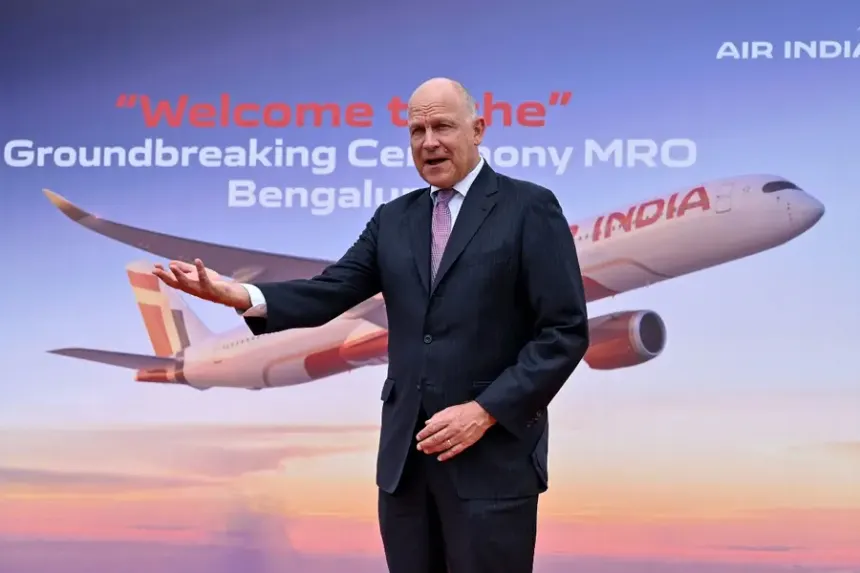
Wilson, who joined from Singapore Airlines’ Scoot in 2022, will not be leaving immediately. To ensure a “stable footing” for the transition, he will serve a six-month notice period. He will remain in his role until the company appoints a successor, likely by September 2026.
Why is Campbell Wilson Stepping Down?
According to official statements and industry reports, several high-pressure factors led to this decision:
- Mounting Financial Losses: Despite the “Vihaan.AI” transformation strategy, Air India and Air India Express are facing a combined loss of over $1 billion (₹9,808 crore), with analysts predicting the burden could double this year due to high fuel costs and airspace restrictions.
- Shadow of the AI-171 Crash: The airline is still dealing with the fallout from the June 12, 2025, crash of Flight AI-171 in Ahmedabad, which resulted in 241 fatalities. Regulatory scrutiny has been intense, and sources suggest the leadership change aligns with the upcoming release of the final crash investigation report.
- “Foundational Blocks” Complete: Wilson declared the “time is right” to hand over the reins, pointing to the completed merger of four airlines (Air India, Vistara, Air Asia India, and AI Express) and a massive 600-aircraft order book.
- Geopolitical Headwinds: The ongoing West Asia conflict and the closure of Pakistani airspace for Indian carriers have significantly increased operational costs for Air India’s lucrative Western routes.
Air India’s Transformation Under Wilson (2022–2026)
Though challenges marked his exit, Wilson drove the most significant changes in Air India’s 90-year history during his four-year tenure:
| Achievement | Impact |
| Mega-Merger | Successfully integrated Vistara and AirAsia India into a single entity. |
| Fleet Modernization | Placed a record-breaking order for 470+ Boeing and Airbus aircraft. |
| System Overhaul | Modernized legacy IT systems and introduced new physical products/cabin interiors. |
| Workforce Shift | Transitioned the airline from public-sector to private-sector culture and practices. |
Who is the Next CEO?
The Air India Board, led by Chairman N. Chandrasekaran, has already constituted a search committee to find a successor.
- Internal Candidates: Several top executives from the Tata Group and Singapore Airlines (SIA) are reportedly being considered.
- External Candidates: The board is also in “advanced talks” with international aviation veterans.
- Timeline: A critical meeting is scheduled for next week, and the team expects to announce a new name once they make the AI-171 crash report public in June.
Also read about Tata Intra EV Pickup
What This Means for a Layman
Think of Air India like a massive, old ship that was sinking until the Tata Group bought it. Campbell Wilson came in as the “fix-it captain” to repair the engines, merge smaller boats into the fleet, and order brand-new ships.
He has finished the repairs, but the ship is still losing money because “fuel is expensive” and a “storm” (the war) rages outside. Now that the hard work of merging everything is done, he hands the wheel to a new captain who will focus on making the ship profitable and safe again.
Disclaimer: The views expressed are for informational purposes only and do not constitute financial advice. Investing in stocks and IPOs involves significant risk.forgeup.in is not liable for any financial losses. Always consult a certified investment advisor before making any decisions.