
Adani Ports and Special Economic Zone (ADANIPORTS) shares experienced a notable decline today, May 12, 2026, closing down 3.43 percent at Rs 1706.6. This fall comes amidst a broader market correction and profit booking in several Adani Group stocks. For many retail investors, understanding why a stock with strong fundamentals can see such a drop is crucial.
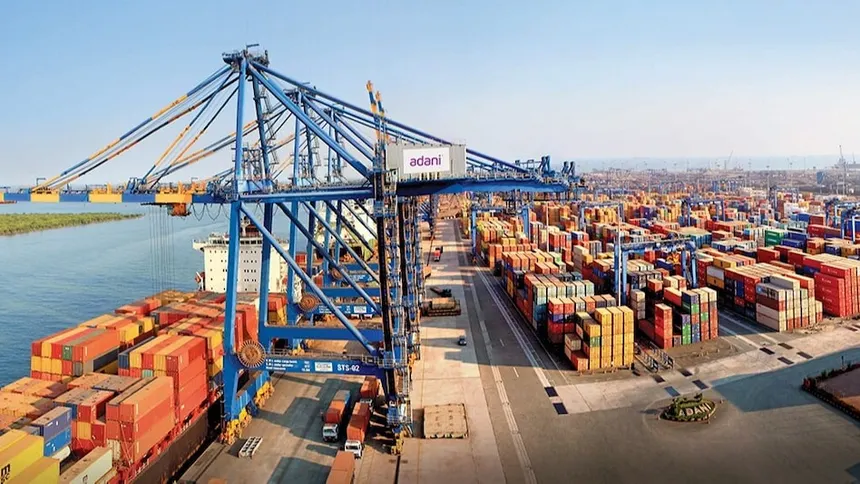
Adani Ports Share Price Today Down 3.43%: Broader Market Crash, Profit Booking & What the 45 Lakh Share Volume Is Really Signalling
Quick Highlights: What Happened on May 12, 2026
- Significant Drop: Adani Ports’ share price closed at Rs 1706.6, marking a 3.43% decline from its previous close.
- Broader Market Impact: The fall occurred as the Nifty 50 index also saw a decline of 1.25%, indicating widespread selling pressure.
- Intraday Movement: The stock traded between an intraday high of Rs 1750.00 and an intraday low of Rs 1700.00 today.
- Profit Booking: The decline could be attributed to profit booking after a period of strong performance by the Adani Group.
- High Volume: The stock recorded a trading volume of 45,00,000 shares, reflecting active participation in the sell-off.
Key Market Data — May 12, 2026
| Metric | Value (as of May 12, 2026) | Change |
|---|---|---|
| ADANIPORTS | Rs 1706.6 | ▼ 3.43% |
| 52-Week High | Rs 1800.00 | N/A |
| 52-Week Low | Rs 1200.00 | N/A |
| Market Cap | Rs 3,68,000 Cr | N/A |
| Volume | 45,00,000 shares | N/A |
Why It Happened: The Real Story Behind May 12, 2026’s Move
While Adani Ports has shown strong operational performance, today’s fall was largely influenced by broader market dynamics and investor sentiment towards the Adani Group.
1. Broader Market Correction?
The primary reason for Adani Ports’ decline today was the overall weakness in the Indian stock market. The Nifty 50 index fell by 1.25%, indicating a widespread sell-off across various sectors. When the benchmark indices experience such a significant correction, even fundamentally strong stocks tend to face selling pressure as investors reduce their overall market exposure.
2. Profit Booking in Adani Group Stocks?
Several Adani Group stocks have seen substantial rallies recently, leading to high valuations. Today’s decline in Adani Ports, alongside other group entities like Adani Enterprises, suggests that investors are engaging in profit booking. This means that after a period of gains, some investors are selling their shares to lock in profits, which can lead to downward pressure on the stock price.
3. Global Macroeconomic Headwinds?
The Indian market is not immune to global macroeconomic factors. Concerns over inflation, interest rate trajectories in major economies, and geopolitical tensions can lead to a cautious approach from foreign institutional investors (FIIs). This broader uncertainty often results in FIIs pulling money out of emerging markets, contributing to selling pressure on large-cap stocks.
The Broader Picture: What This Means for Indian Markets
The fall in Adani Ports today, mirroring the broader market’s decline, highlights the current cautious sentiment among investors. While Adani Ports has consistently demonstrated robust operational performance, including strong cargo volumes and strategic expansions, market-wide corrections can temporarily overshadow individual company strengths.
This situation also reflects how investor sentiment towards a conglomerate can impact its individual entities. Despite Adani Ports’ strong business fundamentals and its position as India’s largest port operator, it remains susceptible to broader market movements and any shifts in perception regarding the Adani Group. This is why diversification and understanding market cycles are important for retail investors.
Also read about Fundamental Analysis of IRFC
What the Data Shows for Investors
The data from May 12, 2026, clearly indicates a negative sentiment for Adani Ports. The stock’s 3.43% decline to Rs 1706.6, coupled with a high trading volume of 45,00,000 shares, suggests active selling. This pattern shows that a significant number of investors were offloading their shares today.
NSE figures indicate that the stock’s intraday low of Rs 1700.00 was close to its closing price, further reinforcing the bearish momentum. While the company’s long-term growth prospects remain tied to India’s trade and logistics expansion, the short-term price action is currently dominated by market-wide and group-specific profit booking. This pattern suggests that market sentiment is a key driver in the current scenario.
Frequently Asked Questions
1. What is the main business of Adani Ports?
Adani Ports and Special Economic Zone (APSEZ) is India’s largest private port operator, engaged in developing and operating ports, terminals, and logistics services across the country.
2. How has Adani Ports performed recently?
Adani Ports has shown strong operational performance, reporting a 26% year-on-year increase in cargo volumes for FY26 and a 76% rise in net profit for Q4 FY26.
3. Are all Adani Group stocks falling today?
While Adani Ports saw a significant fall, other Adani Group stocks also experienced declines today, indicating a broader profit booking trend across the conglomerate.
4. What is the 52-week high for Adani Ports?
The 52-week high for Adani Ports is Rs 1800.00, reached earlier in the year.
The Bottom Line
Adani Ports’ fall today was primarily a reflection of a broader market correction and profit booking, rather than any specific negative news about the company itself. The data clearly shows that even fundamentally strong stocks can experience declines when the overall market is weak or when investors decide to lock in profits. Understanding these market dynamics is essential for retail investors to navigate such movements.
Disclaimer: The views expressed are for informational purposes only and do not constitute financial advice. Investing in stocks and IPOs involves significant risk.
forgeup.in is not liable for any financial losses. Always consult a certified investment advisor before making any decisions.