
The Indian primary market remains a beehive of capital activity across mid-and-small-cap sectors. The latest corporate entity preparing to make its public market debut is Gujarat-based textile infrastructure provider Aastha Spintex Limited.
According to its formally finalized Red Herring Prospectus (RHP) disclosures, the book-built mainboard initial public offering (IPO) is scheduled to open for subscription bidding on Monday, June 29, 2026, and close on Wednesday, July 1, 2026. The company’s shares are slated for a dual listing on both the BSE and NSE mainboards on Monday, July 6, 2026, following the official finalization of allotments on Thursday, July 2.
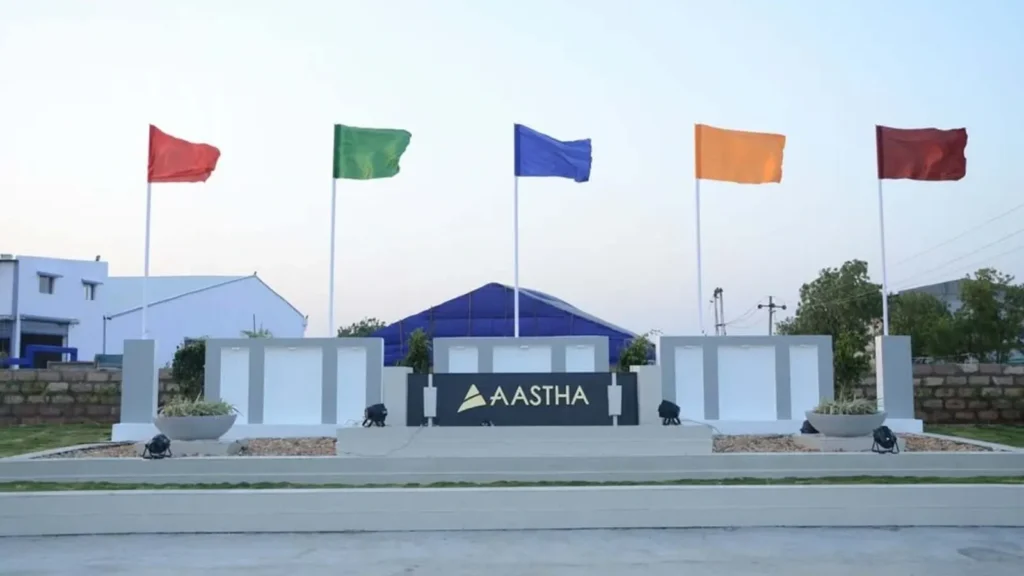
Aastha Spintex enters the public marketplace riding a strong operational cycle across the domestic and export textile ecosystems. For market participants looking to maximize asset allocation within core consumer manufacturing and industrial spinning segments, this detailed review covers the company’s issue architecture, corporate business model, financial parameters, balance sheet constraints, and pre-issue market valuation lines.
1. The IPO Scorecard: Issue Architecture & Key Capital Timelines
The mainboard offering is structured entirely as a 100% fresh equity issue designed to channel retail and institutional capital straight into corporate asset integration, ensuring zero exit routes for founding promoters.
Key Offer Parameters & Allotment Framework
| Offering Parameter | Specification & Capital Metric Details |
| IPO Subscription Window | Monday, June 29, 2026 – Wednesday, July 1, 2026 |
| Price Band Range | ₹125 to ₹136 per equity share (Face Value: ₹10) |
| Total IPO Issue Size | 1,25,00,000 Equity Shares (aggregating to ₹170.00 Cr) |
| Fresh Issue Component | ₹170.00 Crore (100% Fresh Issue / No OFS) |
| Offer for Sale (OFS) | Zero (0) Shares / Complete promoter alignment |
| Minimum Application Lot | 110 Equity Shares per Application |
| Minimum Retail Capital | 1 Lot / 110 Shares / ₹14,960 Minimum Allocation (Upper Band) |
| Institutional Allocations | 50% Max to QIB / 35% to Retail / 15% to Non-Institutional (NII) |
| Book Running Lead Managers | BOI Merchant Bankers Limited, PNB Investment Services Limited |
| Registrar to the Issue | Bigshare Services Private Limited |
| Basis of Share Allotment | Thursday, July 2, 2026 |
| Proposed Market Listing | Monday, July 6, 2026 (BSE & NSE Mainboard) |
Reinvestment Strategy: The Falcon Yarns Acquisition Blueprint
Because the public offering features no promoter stake liquidation, 100% of the ₹170.00 Crore gross proceeds flows back into the company. The net proceeds are earmarked for a focused inorganic asset integration strategy:
- Acquisition of Falcon Yarns (₹111.51 Crore): Direct allocation to execute the purchase and structural integration of Falcon Yarns Private Limited to scale its core production spindle volume.
- Subsidiary Working Capital Infusion (₹10.00 Crore): Issuing inter-corporate deposits to immediately fund Falcon Yarns’ localized cotton inventory blocks and operational liquidity.
- General Corporate Purposes (₹48.49 Crore): Meeting routine corporate overheads, strategic marketing outlays, and platform maintenance cycles.
2. Business Model: The Integrated Cotton-to-Yarn Flywheel
Incorporated in August 2013, Aastha Spintex operates as a vertically integrated manufacturer and B2B trader of high-grade cotton yarn, cotton bales, and cotton waste by-products. Headquartered in the prime textile belt of Gujarat, the group manages a semi-automated spinning and ginning facility located at Halvad in Morbi, Gujarat.
| Stage | Description |
|---|---|
| Ginning Plant | Segregates raw cotton lint from seeds and impurities |
| Captive Spinning | Operates 25,920 spindles with annual yarn production capacity of 7,700 MT |
| Dynamic Cost Moat | Approximately 80% of energy requirements met through solar and wind power |
The company’s core infrastructure profile consists of a 25,920-spindle spinning installation, delivering a rated annual cotton yarn production capacity of 7,700 metric tonnes (MT) alongside an annual ginning output capacity of 12,000 MT of cotton bales.
Aastha’s catalog covers carded, combed, and compact-combed cotton yarn categories in counts spanning Ne 26 to Ne 40. These outputs are distributed to commercial textile processors to manufacture denim, shirting, home sheets, terry towels, and socks.
A central operational differentiator for the group is its substantial renewable energy infrastructure. The facility operates a 1 MW rooftop solar setup, a 4 MW ground-mounted solar farm, and a 2.7 MW wind plant. This green grid supplies approximately 80% of the factory’s total electricity needs, shielding the firm from localized commercial power tariff hikes.
3. Financial Analysis: High Asset Returns & Steady Top-Line Growth
An audit of Aastha Spintex’s consolidated financial statements shows a steady upward trajectory in operational volumes alongside notable growth in profit margins.
Restated Corporate Financial Portfolio
| Financial Metric (₹ in Crore) | FY23 (Standalone) | FY24 (Standalone) | FY25 (Consolidated) | 9M Ended Dec 2025 |
| Revenue from Operations | ₹239.27 Crore | ₹304.86 Crore | ₹351.16 Crore | ₹313.30 Crore |
| Operating EBITDA | ₹11.60 Crore | ₹34.25 Crore | ₹46.36 Crore | ₹35.25 Crore |
| EBITDA Margin Profile (%) | 4.85% | 11.23% | 13.20% | 11.25% |
| Profit After Tax (PAT) | ₹1.06 Crore | ₹16.29 Crore | ₹22.92 Crore | ₹17.55 Crore |
| PAT Margin Profile (%) | 0.44% | 5.34% | 6.53% | 5.60% |
| Tangible Corporate Net Worth | ₹60.01 Crore | ₹76.38 Crore | ₹121.05 Crore | ₹153.18 Crore |
Reviewing the Operating Performance
The group’s operational revenues expanded from ₹239.27 crore in FY23 to ₹351.16 Crore in FY25, maintaining an attractive compounding velocity. Profitability followed a similar growth path, with full-year FY25 PAT hitting ₹22.92 Crore, driven by its power-saving green infrastructure and an optimized product mix.
Backed by these figures, the company closed its latest full audited fiscal cycle reporting a remarkable Return on Equity (ROE) of 23.21% and a Return on Capital Employed (ROCE) of 18.89%, highlighting highly efficient asset utilization prior to the IPO.
4. Balance Sheet Architecture & Key Risk Metrics
- Controlled Financial Leverage: Prior to entering the public market, Aastha effectively managed its debt requirements, systematically reducing its Debt-to-Equity ratio down to 0.66x by December 2025 from 1.35x in FY23. This conservative profile ensures its operating cash flows face minimal structural interest burdens.
- Negative Operating Cash Flows: Because spinning operations require holding large bulk raw cotton stocks during seasonal harvest windows, cash flow from operations recorded a deficit of ₹13.60 Crore for the 9-month block ended December 2025. Effectively managing working capital turns remains vital to support its expansion.
Critical Vulnerability Matrix
1. Heavy Geographic and Reseller Concentration: The company is significantly exposed to channel partner risk. A substantial portion of its out-of-state sales and international exports is managed through a single reseller, 7 Seas Impex.
2. Execution Risk from Falcon Yarns Integration: Deploying roughly 65% of the gross IPO capital to acquire Falcon Yarns creates near-term operational integration and post-merger capacity-matching challenges for management.
3. High Flammability and Material Handling Exposures: Cotton processing involves handling volatile organic dust blocks. Any localized fire accidents or material damage at its single Halvad manufacturing facility could impact short-term production timelines.
5. Market Valuation & Final Pre-Issue Investment Verdict
At the upper price band of ₹136 per equity share, Aastha Spintex’s post-issue equity base translates to an implied post-IPO market capitalization of ₹600.33 Crore.
Evaluating this implied valuation against its annualized 9-month earnings run-rate places the company’s post-issue Price-to-Earnings (P/E) multiple at 25.65x.
When compared to established, listed textile and ring-spinning industry peers—such as Ambika Cotton Mills (trading near 15x P/E), Lagnam Spintex (trading near 14x P/E), and Pashupati Cotspin—Aastha Spintex’s forward multiple of 25.65x commands a relative growth premium. However, this premium is supported by its strong 23.21% ROE baseline, its successful shift from a private firm into an integrated public utility, and its excellent cost discipline driven by its 80% clean energy dependency.
Strategic Investment Verdict: Subscribe with a Medium to Long-Term View.
Aastha Spintex Limited presents a fundamentally sound manufacturing asset well-positioned to ride the ongoing domestic textile super-cycle. The company’s integrated ginning-to-spinning ecosystem, paired with an extensive renewable energy infrastructure that covers 80% of its power requirements, provides a resilient cost advantage.
The structural decision to issue 100% fresh equity with zero founder cash-outs confirms clear internal leadership alignment. While investors must stay mindful of working capital inventory cycles and export reseller concentrations, the company’s planned consolidation of Falcon Yarns will directly scale its total spindle output. This makes the stock a compelling addition for growth-focused portfolios looking to capture steady manufacturing returns across upcoming industrial cycles.
Disclaimer: The views expressed are for informational purposes only and do not constitute financial advice. Investing in stocks and IPOs involves significant risk. forgeup.in is not liable for any financial losses. Always consult a certified investment advisor before making any decisions.