
Adani Enterprises vs. Reliance Industries: Inside India’s economic landscape, two massive corporations drive the nation’s infrastructure and consumer evolution: Reliance Industries Limited (RIL), masterminded by Mukesh Ambani, and Adani Enterprises Limited (AEL), the incubator flagship of Gautam Adani’s empire. Once separated by distinct operational boundaries—with Reliance owning digital, retail, and refining spaces while Adani dominated ports, mining, and localized utilities—the corporate map has completely transformed. Today, they face off directly in a race to control India’s tech, green energy, and logistics infrastructures.
As of late May 2026, the stock market sessions reflect the unique positions of these two giants. Adani Enterprises is trading at approximately ₹2,937.40, showing sharp multi-week growth despite absorbing heavy capital expansion depreciation costs. Meanwhile, Reliance Industries trades at ₹1,321.20, stabilizing its massive financial footprint after posting the highest annual revenue in the history of Indian corporate enterprise.
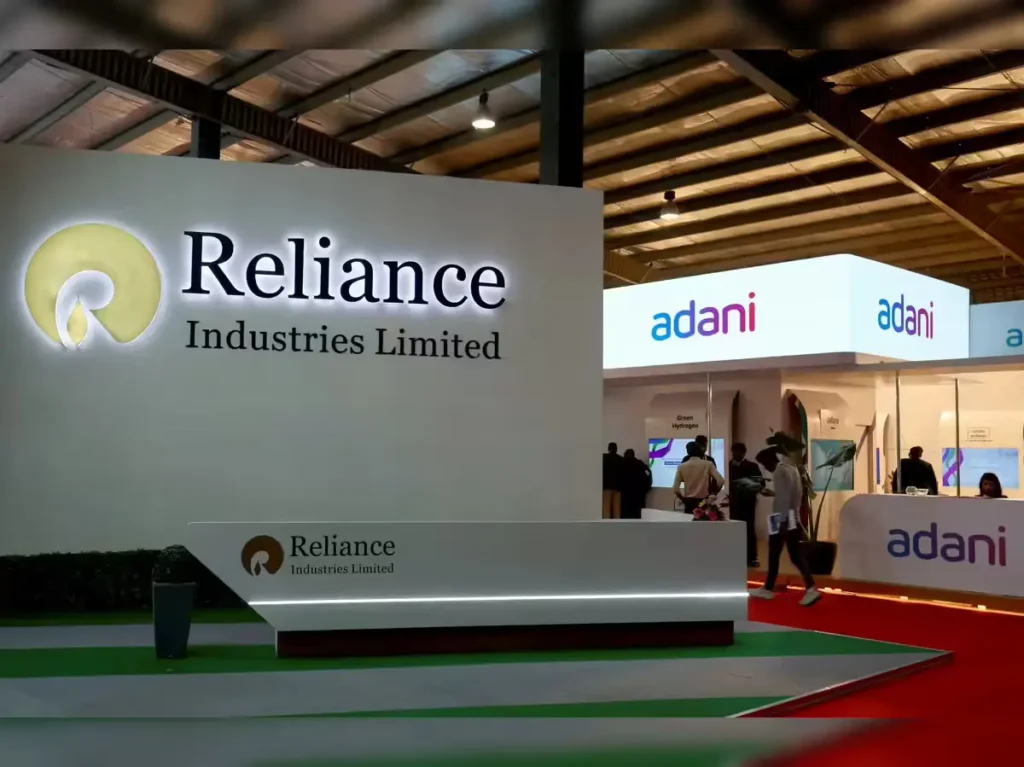
Adani Enterprises vs. Reliance Industries in 2026: What a ₹221 Crore Loss and ₹95,754 Crore Profit Really Tell Investors
Financial Scorecard: Monolithic Cash Processing vs. Incubator Capital Velocity
The audited Q4 FY26 and full-year results showcase two completely different business designs operating at maximum scale. Reliance functions as an established, diversified free-cash-flow machine, while Adani Enterprises acts as a high-velocity business incubator designed to build and spin off independent market monopolies.
Financial Performance Comparison (Full Year FY26 Consolidated Close)
| Financial Metric | Reliance Industries Limited (RIL) | Adani Enterprises Limited (AEL) |
| Market Capitalization | ~₹17.86 Lakh Crore | ~₹4.06 Lakh Crore |
| Annual Operating Revenue | ₹11,75,919 Crore ($124 Billion) | ₹1,02,400 Crore |
| Consolidated EBITDA | ₹2,07,911 Crore | ₹16,464 Crore |
| Full Year Profit After Tax (PAT) | ₹95,754 Crore ($10.1 Billion) | ₹9,339 Crore |
| Q4 FY26 Standalone Metric | PAT: ₹28,589 Crore (cyclical oil dip) | Net Loss: (₹221 Crore) due to depreciation |
Decoding the Q4 Discrepancy
The performance numbers from the final quarter highlight the structural differences between these two firms. Adani Enterprises surprised the market by posting a consolidated net loss of ₹221 crore in Q4 FY26 (a sharp reversal from its ₹3,845 crore profit in Q4 FY25), even though operations expanded revenues by 20% to ₹32,439 crore. This drop was not caused by weak demand; rather, it was driven by heavy depreciation charges linked to commissioning massive infrastructure assets, including the Navi Mumbai airport and new copper refining plants.
Conversely, Reliance reported an extraordinary full-year net profit of ₹95,754 crore, though its final quarter experienced a slight sequential tightening. This minor squeeze was driven by cyclical compression in global refining spreads and higher 5G infrastructure depreciation charges.
Sector Face-Off: The Strategic Arenas of 2026
| Reliance Industries | Adani Enterprises |
|---|---|
| Digital Services (Jio IPO) | Critical Logistics Airports |
| Consumer Retail Dominance | Data Centers & AI Clouds |
| Downstream O2C Cash Engine | High-Barrier Core Mining |
| Upstream Clean Solar/Cell | Upstream Green Hydrogen |
A. The New Energy Super-Cycle
The most critical long-term structural face-off is occurring within the multi-billion-dollar green energy transition. Both conglomerates are vying to control the complete domestic clean-tech value chain.
- Reliance’s Jamnagar Gigafactories: Mukesh Ambani has deployed massive capital to operationalize fully integrated manufacturing facilities for photovoltaic solar cells, energy storage batteries, and green hydrogen electrolyzers. Reliance aims to utilize this massive production scale to become the lowest-cost producer of green substrates globally.
- Adani’s Infrastructure Loop: Gautam Adani is approaching the race from an infrastructure perspective. Backed by its massive land holdings in Khavda, Gujarat, Adani is building an end-to-end green hydrogen ecosystem. By linking captive wind and solar generation directly to proprietary manufacturing setups, Adani Enterprises has shifted 80% of its business model toward long-term contracted utilities, securing steady cash flow visibility.
B. High-Tech Infrastructure and Digital Data Dominance
- Reliance’s Consumer Monopoly: Reliance owns the end-consumer digital relationship through Jio Platforms, which now commands over 515 million subscribers. Driven by its automated 5G network expansion, Jio posted a massive profit jump, setting the stage for its upcoming, highly anticipated IPO.
- AdaniConneX Data Centers: Rather than competing for consumer telecom data, Adani Enterprises is building the physical backbone of India’s tech ecosystem. Through its AdaniConneX joint venture, the group is aggressively expanding hyper-scale data centers across Chennai, Noida, and Hyderabad. This strategy positions Adani to manage the high-density computing loads required for the country’s rapid artificial intelligence transition.
Fundamental Moats and Financial Risk Profiles
1. The Incubation Moat vs. Single-Entity Protection
Adani Enterprises possesses an unassailable structural moat through its proven incubation framework. AEL acts as a corporate engine that takes high-risk infrastructure projects—such as roads, data centers, copper plants, and airports—builds them to financial maturity, and then value-unlocks them for shareholders through targeted spin-offs (demergers).
Reliance operates as a single mega-conglomerate. While this format protects the balance sheet by allowing steady oil-to-chemicals (O2C) cash flows to fund early-stage retail and digital projects, it lacks the agile, rapid value-unlocking capabilities of Adani’s structure.
2. Debt Architecture and Solvency Realities
Historically a key point of evaluation for institutional desks, the debt profiles of both giants have significantly improved:
- Reliance Deleveraging: Backed by ₹2,07,911 crore in annual EBITDA, Reliance operates with immense solvency comfort, maintaining a net-debt-to-EBITDA ratio well below 1.5x.
- Adani Financial Health: Following extensive corporate restructuring over the past three years, Adani’s core infrastructure assets are backed by long-term sovereign and international capital. Promoters have systematically cleared share pledges, moving AEL’s full-year profit-after-tax up 31% to ₹9,339 crore, demonstrating strong capital efficiency.
Also read about: Big Latest Today: 5 Global Cues That Will Actually Move Sensex on Monday
Valuation Stance: Growth Multiples vs. Value Fortresses
| Valuation Parameter | Reliance Industries Limited (RIL) | Adani Enterprises Limited (AEL) |
| Current Share Price | ₹1,321.20 | ₹2,937.40 |
| Trailing P/E Ratio (TTM) | 22.14x | 38.85x |
| Price-to-Book (P/B) Ratio | ~2.2x | ~4.2x |
| Capital Return Design | Final dividend of ₹6 per equity share | Dividend of ₹1.30 per equity share |
| Consensus Growth Outlook | Steady consumer monetization | Hyper-aggressive infrastructure expansion |
Frequently Asked Questions
Why did Adani Enterprises report a net loss in Q4 FY26 despite strong revenues?
The consolidated net loss of ₹221 crore was primarily driven by elevated, non-cash depreciation and finance charges. These expenses rose as the company commercially activated major capital expansions, including its mega copper plant and initial Navi Mumbai transport infrastructure assets.
What are the key details of the latest dividends announced?
Reliance Industries approved a final dividend of ₹6.00 per share (bringing its total FY26 dividend flow to ₹11.50 per share). Adani Enterprises recommended a dividend distribution of ₹1.30 per equity share for the financial year, with the eligibility record date fixed as Friday, June 12, 2026.
How are the two conglomerates managing the artificial intelligence boom?
Reliance is leading consumer-end integration, using Jio Platforms to deliver automated AI cloud solutions to its mass market of 515 million subscribers. Adani Enterprises is leading industrial-end execution, building hyper-scale data center infrastructure through its AdaniConneX joint venture to manage the country’s rising enterprise computing workloads.
Conclusion
Evaluating the hard financial data outlines two distinct paths for institutional portfolio construction.
Reliance Industries represents India’s premier value-growth defensive asset. At a reasonable trailing P/E of 22.1x, the stock offers a massive margin of safety. Backed by an annual net profit of ₹95,754 crore, total dominance over India’s digital and retail consumer layers, and the cash flow stability of its massive refining assets, RIL functions as a resilient defensive anchor for large-scale capital preservation.
Conversely, Adani Enterprises is a premium, high-beta incubator built for aggressive expansion. Trading at 38.8x trailing earnings, it commands a distinct growth premium. The near-term Q4 net loss of ₹221 crore is a cyclical side-effect of large-scale asset creation rather than a structural decay of the machine. For growth-oriented portfolios, accumulating AEL on tactical market corrections offers an exceptional window to capture massive returns as its next generation of mega-projects—including the Navi Mumbai infrastructure complex, green copper refineries, and hyper-scale AI data centers—reach operational maturity and head toward independent public listings.
Disclaimer: The views expressed are for informational purposes only and do not constitute financial advice. Investing in stocks and IPOs involves significant risk.
forgeup.in is not liable for any financial losses. Always consult a certified investment advisor before making any decisions.