
The Indian stock market has seen massive growth in retail participation over the past decade. As a result, the demand for a reliable online stock broker in India has increased significantly. Modern investors now prefer digital trading platforms that allow them to buy and sell stocks, mutual funds, ETFs, and derivatives through mobile apps or web platforms.
With several brokerage firms offering low trading costs and advanced tools, selecting the right online stock broker India platform can significantly impact your investment experience. Factors such as brokerage charges, platform stability, research tools, and regulatory compliance all play a crucial role.
This guide explains how online stock brokers in India work, compares some popular platforms, and highlights what investors should consider before opening a trading account.
Best Online Stock Broker India 2026: Top Trading Platforms
An online stock broker in India is a financial intermediary that allows investors to trade securities electronically through stock exchanges such as the NSE and BSE.
Instead of calling a traditional broker to place trades, investors can execute transactions instantly using:
- Mobile trading apps
- Web trading platforms
- Algorithmic trading APIs
Most modern brokers follow a discount brokerage model, which means they charge a flat fee per trade rather than a percentage of the trade value.
Online brokers also provide additional services such as:
- Demat accounts to hold securities
- Real-time market data
- Portfolio tracking
- Charting and technical analysis tools
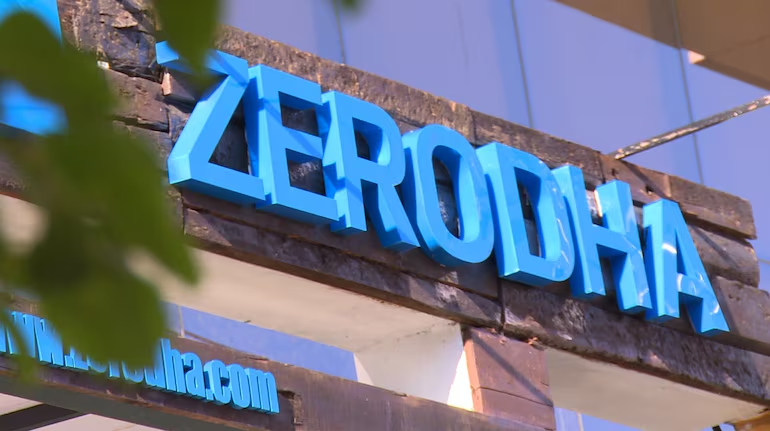
Popular Online Stock Broker India Platforms (2026)
Several brokerage firms dominate the Indian online trading ecosystem. Below is a simplified comparison of widely used brokers.
| Broker | Type | Delivery Brokerage | Intraday / F&O | Key Strength |
|---|---|---|---|---|
| Groww | Discount Broker | ₹20 or 0.1% per order | ₹20 per order | Beginner-friendly platform |
| Zerodha | Discount Broker | ₹0 brokerage | ₹20 per order | Advanced trading tools |
| Angel One | Hybrid Broker | ₹0–₹20 depending on plan | ₹20 per order | Research and advisory |
| Upstox | Discount Broker | ₹20 per order | ₹20 per order | Fast trading infrastructure |
| ICICI Direct | Full-service broker | Percentage-based brokerage | Variable | Banking integration |
For example, Groww charges the lower of ₹20 or 0.1% of trade value per order for equity trading.
Similarly, Zerodha offers free equity delivery trades and a flat brokerage fee for intraday and derivatives trading.
Many discount brokers in India now follow a flat ₹20 brokerage structure for active trading, which has become the industry standard.
Key Factors When Choosing an Best Online Stock Broker in India
Choosing the right online stock broker India platform requires evaluating several factors beyond just brokerage fees.
1. Brokerage Charges
Brokerage is the fee charged for executing trades. Discount brokers usually charge a flat amount per trade, while full-service brokers charge a percentage of the transaction value.
Lower brokerage is particularly important for active traders who execute multiple trades daily.
2. Trading Platform and Technology
A good trading platform should provide:
- Fast order execution
- Advanced charting tools
- Real-time market data
- Stable mobile apps
Many modern platforms integrate TradingView charts, algorithmic trading APIs, and portfolio analytics tools.
3. Research and Investment Tools
Some investors prefer brokers that provide:
- Stock research reports
- Portfolio advisory services
- Market insights and analysis
Full-service brokers such as ICICI Direct or Kotak Securities typically offer stronger research support compared to discount brokers.
4. Account Charges and AMC
Apart from brokerage fees, investors should also check annual maintenance charges (AMC).
Most demat accounts charge around ₹200 to ₹400 per year depending on the broker and account type.
Some brokers waive these charges for the first year to attract new customers.
Latest SEBI Regulations Impacting Online Brokers
The regulatory environment for online stock broker India platforms has also evolved recently. SEBI introduced the Stock Brokers Regulations, 2026, replacing older rules to improve governance and investor protection.
Some key highlights include:
Stronger Compliance and Governance
The new regulations aim to modernize the regulatory framework and improve operational standards for brokerage firms.
Faster Investor Grievance Resolution
Stock brokers must now resolve investor complaints within 21 calendar days, improving investor protection.
Enhanced Cyber Security
- Brokers must implement robust cyber-security frameworks to safeguard client data and trading infrastructure.
- These changes aim to increase transparency and reliability across the Indian brokerage ecosystem.
Discount Brokers vs Full-Service Brokers
When selecting an online stock broker India, investors usually choose between two categories.
Discount Brokers
Discount brokers focus on:
- Low brokerage fees
- Technology-driven trading platforms
- Faster execution
These platforms are ideal for active traders and investors who prefer managing their own portfolios.
Full-Service Brokers
Full-service brokers provide:
- Investment advisory
- Research reports
- Portfolio management services
Although their brokerage charges may be higher, they offer personalized support for investors who want professional guidance.
Hidden Trading Costs Investors Should Know
While brokerage is the most visible cost, several other charges apply when trading stocks.
These include:
- Securities Transaction Tax (STT)
- Exchange transaction charges
- GST on brokerage
- Stamp duty
Additionally, a Depository Participant (DP) charge is applied when shares are sold from a demat account, which is typically around ₹15–₹20 plus GST depending on the broker.
Understanding these costs helps investors estimate the actual expense of trading.
Also Read: DCX Systems Stock Surges 14% After Securing ₹68 Crore Order from HAL
Which Online Stock Broker in India Is Best for Beginners?
For beginners entering the stock market, simplicity and ease of use are extremely important.
Platforms such as Groww and Paytm Money are often preferred by new investors because they offer:
- Easy account opening
- Clean and simple interface
- Straightforward investment features
These apps focus on simplifying the investment process rather than offering complex trading tools.
Best Online Stock Broker India Platforms for Active Traders
Experienced traders typically prioritize advanced tools and faster execution.
Platforms such as Zerodha Kite and Dhan are widely used by active traders because they provide:
- Advanced charting tools
- Algorithmic trading APIs
- Order management systems
- TradingView chart integration
These features are particularly useful for traders who rely on technical analysis or automated trading strategies.
Final Thoughts
Choosing the right online stock broker India platform depends largely on your investment style.
- Active traders usually prefer discount brokers with flat brokerage fees and advanced trading tools.
- Long-term investors may prioritize simple platforms with low account maintenance costs.
- Research-driven investors may prefer full-service brokers that offer advisory and portfolio management services.
Before opening a trading account, investors should compare brokerage charges, platform features, regulatory compliance, and customer support. Making an informed decision can significantly improve the overall trading experience.
FAQs
What is the best online stock broker in India?
The best broker depends on your trading style. Zerodha, Groww, Upstox, and Angel One are among the most widely used online brokers in India.
Are online stock brokers safe in India?
Yes. All stock brokers in India must be registered with the Securities and Exchange Board of India (SEBI) and follow regulatory guidelines.
How much brokerage do online brokers charge?
Most discount brokers charge around ₹20 per executed trade for intraday and derivatives, while some offer free equity delivery trading.